Last updated November 25, 2026
Free roof inspection with deck photos before we talk money - GAF and Owens Corning certified installation
DIY vs Professional Roofing: The Citrus Heights Homeowner’s Decision Guide
Most homeowners assume the only thing standing between them and a self-installed roof is skill and nerve. In California, the bigger obstacle is paperwork. The moment a homeowner without a C-39 roofing license installs shingles on their own house, the manufacturer’s material warranty can go void, the local permit requires the work be done by a licensed contractor in many cases, and a future buyer’s inspector has a paper trail to follow. A forty-year shingle installed by an unlicensed hand carries a zero-year warranty. This guide walks through what California law actually permits, how the major warranty programs work, and what a realistic DIY savings calculation looks like for a Citrus Heights home.
Quick Answer
California law allows a homeowner to perform some repair and maintenance work on their own primary residence, but most full replacements require a permit, and many manufacturers void material warranties when installation is done by anyone other than a licensed contractor. The honest answer is that DIY roofing in Citrus Heights is viable for a narrow band of small repairs and rarely viable for a full replacement, once warranty loss, permit requirements, and the cost of fixing a mid-project error are counted.
Styles & brands we work with
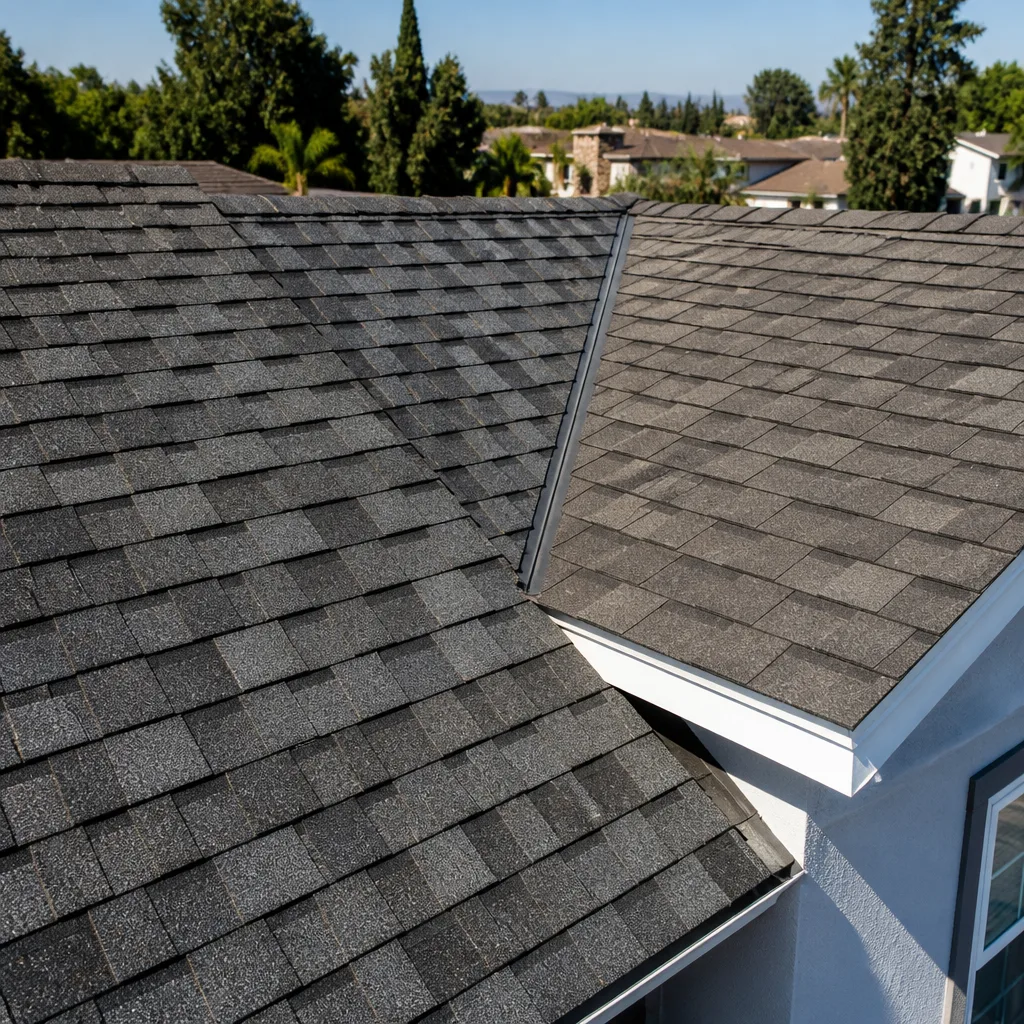
- Architectural shingles
- Metal roofing
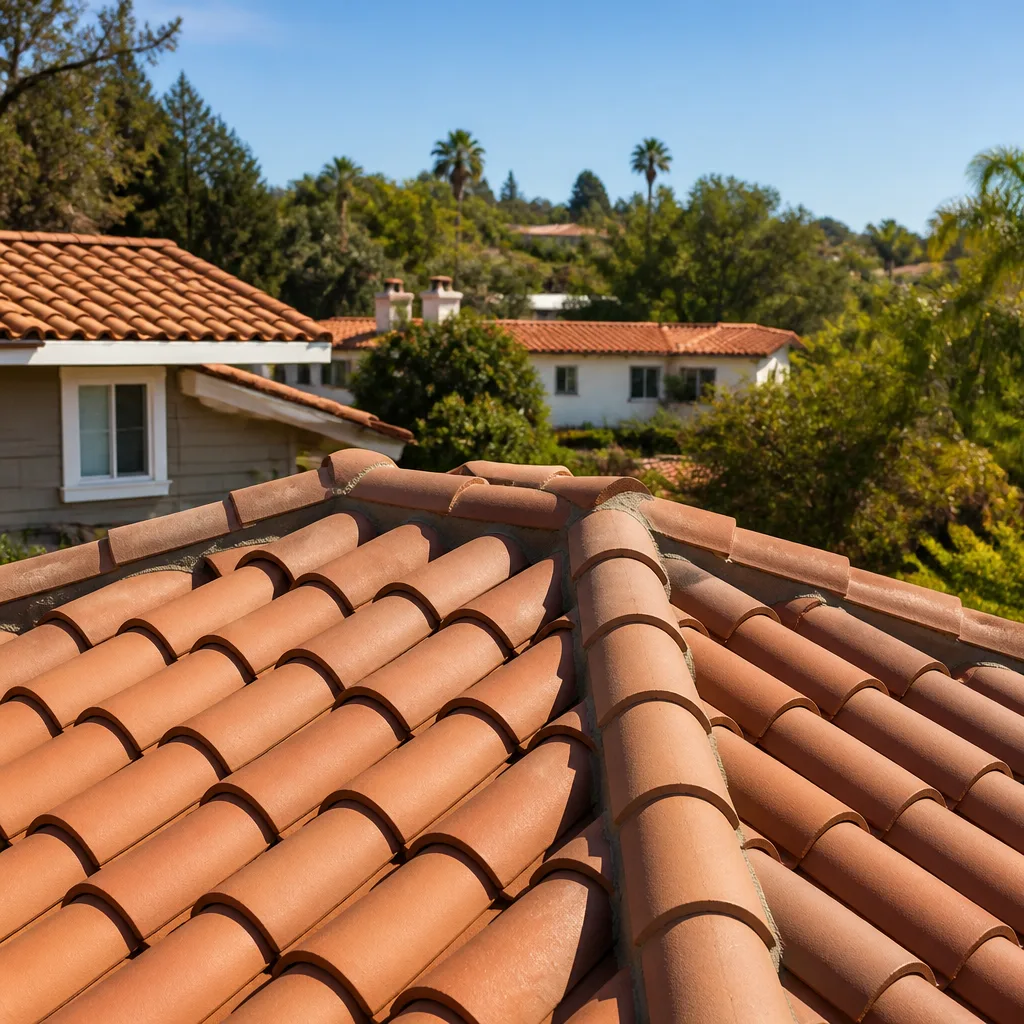
- Tile roofing
- GAF
- Owens Corning
- Flat & low-slope
Table of Contents
- What California Law Actually Permits a Homeowner to Do
- The Warranty Clauses That Void DIY Installation
- The Real DIY Cost-Savings Math
- Repairs That Are Genuinely Within a Skilled DIYer’s Reach
- Repairs With Hidden Complexity
- Insurance Claims and Sale Disclosures in California
- How to Choose the Right Professional When You Do Call
- Permits, Inspections, and the Paper Trail That Follows Your House
What California Law Actually Permits a Homeowner to Do
California’s contractor licensing framework, administered by the Contractors State License Board, exists to protect the public from unqualified work. The board is clear that a license is required for any project priced at $500 or more in labor and materials combined, and roof replacement almost always clears that bar by a wide margin. There’s a narrow owner-builder exemption that lets a homeowner pull permits and do work on their own primary residence. It’s real, and it’s narrower than most YouTube tutorials suggest.
The owner-builder exemption generally doesn’t apply to a home you plan to sell within a year, doesn’t cover rental properties, and typically requires the homeowner to actually perform the work themselves rather than hire unlicensed helpers. Where the legal line gets hazy is the moment a homeowner hires a friend or “a guy” to help with the tear-off. At that point the owner-builder exemption can fall away entirely, and the homeowner can be exposed to liability for unpermitted work and for injuries on the job.
For Citrus Heights homeowners, the practical takeaway is this: pulling a permit for a small flashing repair is usually straightforward, but pulling one for a full replacement and then performing the installation yourself is a legal and financial corner most people don’t want to stand in. The city’s building department can walk you through what a specific permit requires, and it’s worth the phone call before you rent a dumpster.
- Allowed: Minor repairs and maintenance on your own primary residence, in most cases.
- Allowed with a permit: Some structural repairs, depending on scope – always ask the building department.
- Generally not allowed without a license: Full replacements where the owner-builder exemption doesn’t apply, work on rental properties, work on homes being sold within a year.
- Not allowed: Hiring unlicensed workers to perform the roofing labor under your owner-builder permit.
The Warranty Clauses That Void DIY Installation
Here’s the part most DIY guides leave out: the warranty on the shingles you buy at a home improvement store is not the same warranty you get when a licensed contractor installs them. Manufacturers like GAF, Owens Corning, and CertainTeed structure their warranty programs around installation by a licensed, credentialed professional. The material warranty itself may still apply in some cases to the product’s manufacturing defects, but the labor and workmanship coverage – and the enhanced “system” warranties that bundle shingles, underlayment, and ventilation into a longer combined term – require a licensed installer.
That distinction matters because the shingle itself rarely fails on its own. Roofs fail at the details: the flashing, the valleys, the ventilation, the fastening pattern. Those are the parts covered by the workmanship warranty, and that’s exactly the coverage that vanishes when you install your own roof. A homeowner who DIYs a GAF Timberline installation may wind up owning a product marketed as a multi-decade roof with no workmanship coverage behind it at all.
Transferability adds another layer. Manufacturers offering transferable limited lifetime warranties generally require that the original installation was performed by a licensed contractor for the warranty to transfer to a new owner. In a Citrus Heights resale, that clause can matter years after the roof was originally installed. When we install a roof, we’re installing GAF, CertainTeed, Owens Corning, IKO, Atlas, Tamko, or Boral products under the manufacturer’s own warranty program – not a promise we made up. That’s a meaningful difference from a handshake and a receipt.
The Real DIY Cost-Savings Math
The usual DIY pitch is that you save the labor. But labor is only one line in a roofing invoice, and the DIY version replaces it with a long list of expenses most homeowners never itemize. Here’s what a realistic comparison looks like when you line up what a professional bid includes against what a self-installed roof actually costs in real dollars:
- Permit fees: Paid by the homeowner either way. The DIY version requires you to pull it under the owner-builder exemption, which shifts responsibility for code compliance entirely onto you.
- Tool rental: Nail guns, compressors, a shingle cutter, and a dumpster for tear-off debris. None of that is cheap by the day, and multi-day rentals add up fast.
- Safety equipment: Roof anchors, harnesses, and stable ladders. Roofing is one of the most dangerous trades in residential construction, and the safety gear alone often costs more than the labor line someone was trying to avoid.
- Disposal: Old shingles are heavy, and waste haulers charge by weight. A tear-off of an average Citrus Heights roof produces a truckload or more of debris.
- Remediation: This is the one that changes the math. Any mid-project mistake – a missed layer of underlayment, a flashed valley installed wrong, fasteners driven too deep – can require a professional to tear back out partially completed work and redo it. That remediation cost usually exceeds the original labor savings on its own.
Add the loss of manufacturer workmanship coverage, and the savings calculation starts to look thin on anything beyond the smallest repair. The honest framing is that DIY roofing is a real option on a small scope, and the math turns against it fast as the job grows.
Repairs That Are Genuinely Within a Skilled DIYer’s Reach
Not every roofing task is a full-replacement problem, and we’re not going to pretend otherwise. A few repair categories are genuinely reasonable for a homeowner who’s comfortable on a ladder, understands the basics of flashing and fastener depth, and knows when to stop. Here’s the short list:
- Single-shingle replacement on an asphalt roof. A cracked or missing shingle can often be swapped out by a careful homeowner if the surrounding shingles are sound and the fastening pattern is known. This is one of the few repairs where a DIYer with basic tools can make a clean fix.
- Gutter reattachment and resealing. Loose gutter runs and failed seam sealant are within most homeowners’ reach.
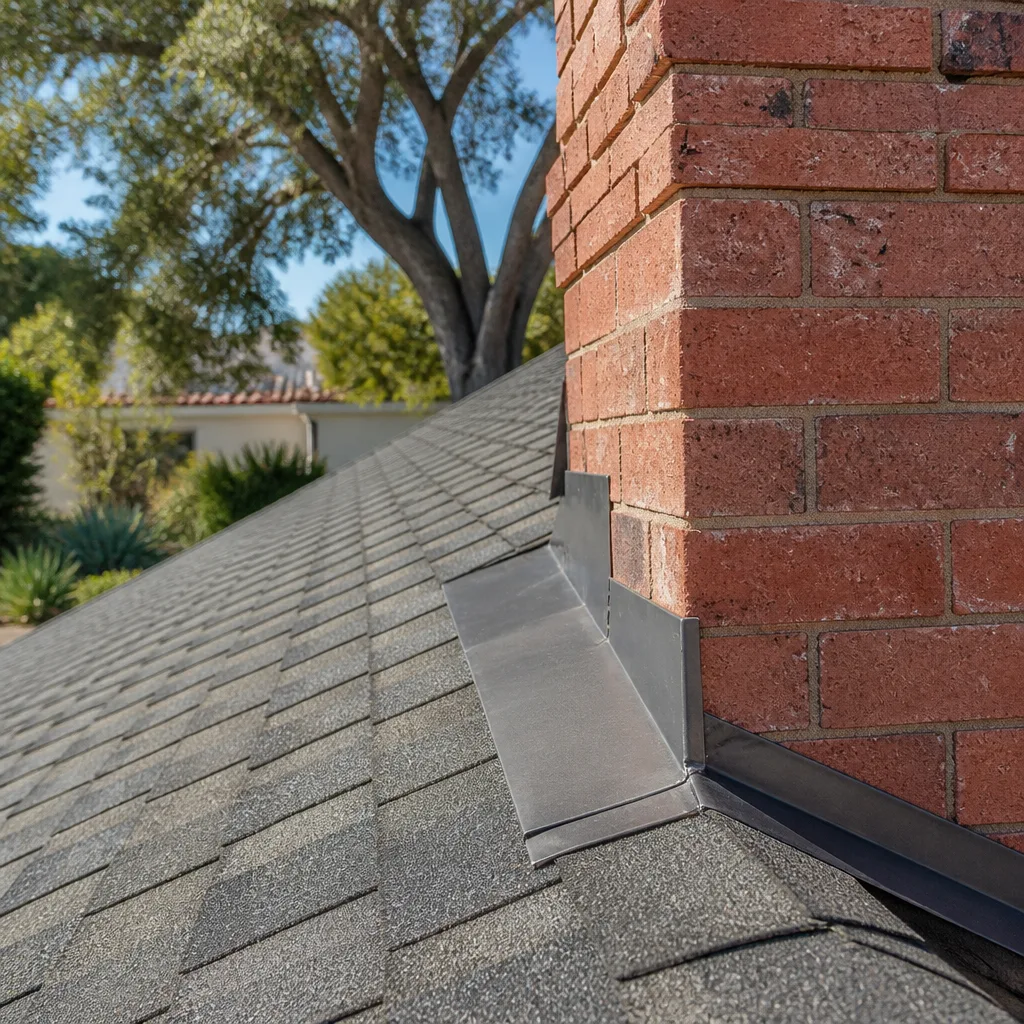
- Minor flashing touch-ups on a sound roof. A gap around a vent pipe or a chimney can sometimes be resealed with the right materials, provided the flashing itself is intact.
- Debris clearing and moss prevention. Keeping valleys and gutters clear is maintenance, not roofing, and it’s worth doing consistently in Citrus Heights where leaves collect quickly.
- Small localized patching. A single nail-pop or a small puncture can often be sealed if the surrounding field is in good shape.
The common thread is scope and access. If the repair requires stepping onto a steep pitch, working above a two-story drop, or removing more than a couple of shingles at once, the risk calculation changes. The safety caveat is real: falls are the number one cause of serious injury in roof work, and no repair is worth a fall from height.
Repairs With Hidden Complexity
The jobs that look easy from the ground and turn out to be a different animal once the shingles come up are the ones where DIY goes wrong. In our experience, these are the categories that carry hidden complexity a homeowner can’t see until the roof is opened:
- Valley repairs. Water concentrates at the valley, and any repair has to correctly layer the underlayment, flashing, and shingles or it will fail. Valley repairs done in the wrong order look fine until the first wet winter.
- Chimney and skylight flashing. These are the details that fail most often in Citrus Heights, and the underlying condition is usually invisible until a leak appears inside the house.
- Age-related deck deterioration. A repair might start as single-shingle replacement and end up exposing dry rot in the roof deck. Once that’s visible, the scope has changed.
- Ventilation corrections. Poor attic ventilation shortens the life of the shingles above it. A homeowner can’t reasonably diagnose the intake-to-exhaust balance without knowing what to look for.
- Multiple leak sources. A single interior stain can have more than one point of origin, especially on a roof over ten years old.
- Fascia and soffit damage. Water that’s been running behind the gutter for a season often means the fascia board needs replacement, not just a new coat of paint.
Each of these is a job we’ve seen a homeowner start and hand off to a professional mid-stream. The cost of a mid-project handoff is almost always higher than starting with professional help, because the crew has to reverse-engineer what was done and assess whether it’s salvageable.
Insurance Claims and Sale Disclosures in California
Two places where DIY roofing can come back to bite a homeowner years later: a homeowner’s insurance claim and a property sale. On the insurance side, most policies require the homeowner to disclose prior roof work and the license status of whoever performed it. If an adjuster determines that past unpermitted or unlicensed work contributed to a loss, the carrier can reduce, deny, or claw back a claim after payment. That’s a significant exposure for a homeowner who saved a few thousand dollars on the install and now faces a five-figure claim.
On the sale side, California’s transfer disclosure statement requires sellers to disclose known material facts about the property, and past roofing work is routinely one of them. A Citrus Heights buyer’s inspector will look at the roof, ask who installed it, and pull the permit history from the city. If there’s no permit on file, or the permit shows an owner-builder installation, the buyer’s lender can balk, and the transaction can require remediation mid-escrow. That’s an expensive surprise, and one of the reasons the professional path tends to cost less overall even when the initial invoice is higher.
How to Choose the Right Professional When You Do Call
If the DIY math has you leaning professional, the next question is which professional. Roofing is not a single product, and the material conversation should drive the contractor conversation. A company that only installs shingle is a company that will only ever quote you shingle, regardless of whether tile or metal is the better fit for your structure and budget. In Citrus Heights, where the summer sun exposure can be intense and the surrounding trees drop debris year-round, that “what fits your home” conversation matters.
We install across all three primary residential materials – asphalt shingle, tile, and metal – and source them from seven manufacturers: GAF, CertainTeed, Owens Corning, IKO, Atlas, Tamko, and Boral. That range means we can compare a GAF Timberline against an Owens Corning Duration against a tile or standing-seam metal system without steering you to whatever’s easiest for us. It also means one company carries accountability for the whole roof instead of two separate contractors pointing at each other when a valley or a transition fails.
A few things to ask any roofing contractor before signing:
- What’s your contractor license number, and can I verify it with the CSLB?
- Which manufacturer warranty will apply to this installation, and does workmanship coverage transfer if I sell?
- Will you pull the permit, and who’s responsible for the inspection?
- What does your written estimate cover line by line, and what would change the price once work starts?
The good news is that a written line-item estimate should answer most of those questions up front. Look for a roof replacement estimate that spells out tear-off, decking, underlayment, flashing, ventilation, and cleanup as separate line items. If it’s a single lump-sum number, ask for the detail before you sign.
Permits, Inspections, and the Paper Trail That Follows Your House
Permits exist to create a record. When a licensed contractor pulls one on your behalf, the city inspects the work at the correct milestones and closes the permit when it passes. That record follows the house. It shows up in a title search, it surfaces in a buyer’s inspection, and it can support an insurance claim years down the road. A permit that doesn’t exist is a gap a buyer or adjuster will notice.
In Citrus Heights, roof replacements generally require a permit, and repairs above a certain scope – especially anything that touches the structure or changes the roof’s profile – typically do as well. The right first call on any larger repair is your city’s building department, not a hardware store. They’ll tell you whether your specific project needs a permit, and what the inspection process looks like. It’s not glamorous, but it’s the difference between a clean paper trail and one that can stall a sale or complicate a claim.
Once you know a permit is in play, the choice of contractor gets simpler. Look for one who’ll handle the permitting and the inspection schedule as part of the job, not as something you have to chase down. That’s part of what a written estimate and a manufacturer-backed warranty are meant to cover: the whole project, start to close.
Common Mistakes to Avoid
- Buying materials before checking warranty terms. The shingle you buy off the shelf carries a different warranty structure than the same shingle installed by a licensed contractor. Confirm the coverage before you load up the truck.
- Assuming the owner-builder exemption applies to your situation. It doesn’t cover rental properties, and it usually doesn’t survive a sale within a year. Ask the CSLB or your city’s building department before you rely on it.
- Replacing a single shingle without checking what’s under it. If the fastening pattern is wrong or the underlayment is compromised, the new shingle fails in the first wet winter. Look at the layer beneath before you patch the surface.
- Skipping the permit because “it’s just a repair.” Scope drives permitting, not the word “repair.” A repair that touches structure or alters the roof’s profile often needs a permit.
- Hiring a helper without verifying license status. A friend-of-a-friend who isn’t licensed can turn an owner-builder permit into an unpermitted job in the space of a handshake.
- Ignoring attic ventilation while the roof is open. New shingles over an under-ventilated attic will underperform their rated lifespan. Ventilation is not optional as part of a replacement.
- Not asking about warranty transferability. If you plan to sell within a few years, ask now whether the manufacturer warranty transfers to the next owner and what’s required for it to do so.
See the difference
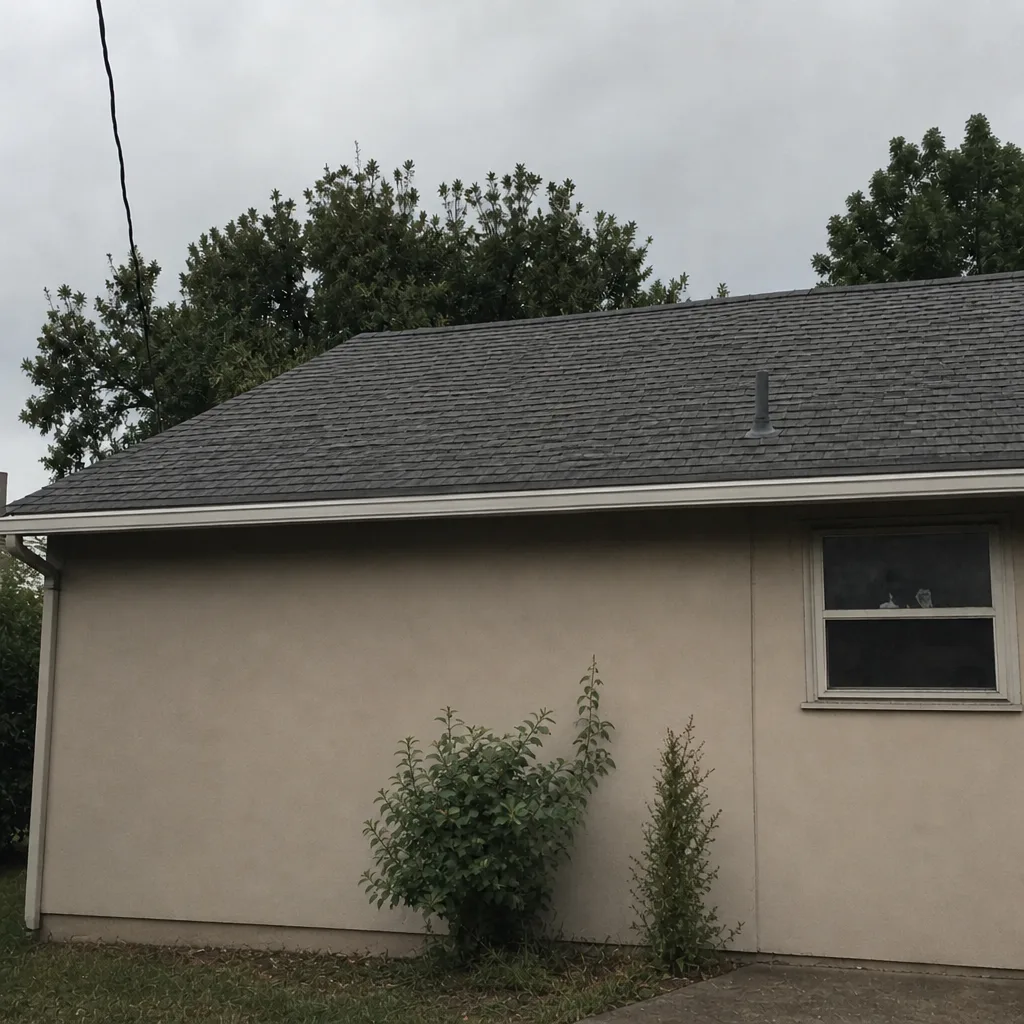
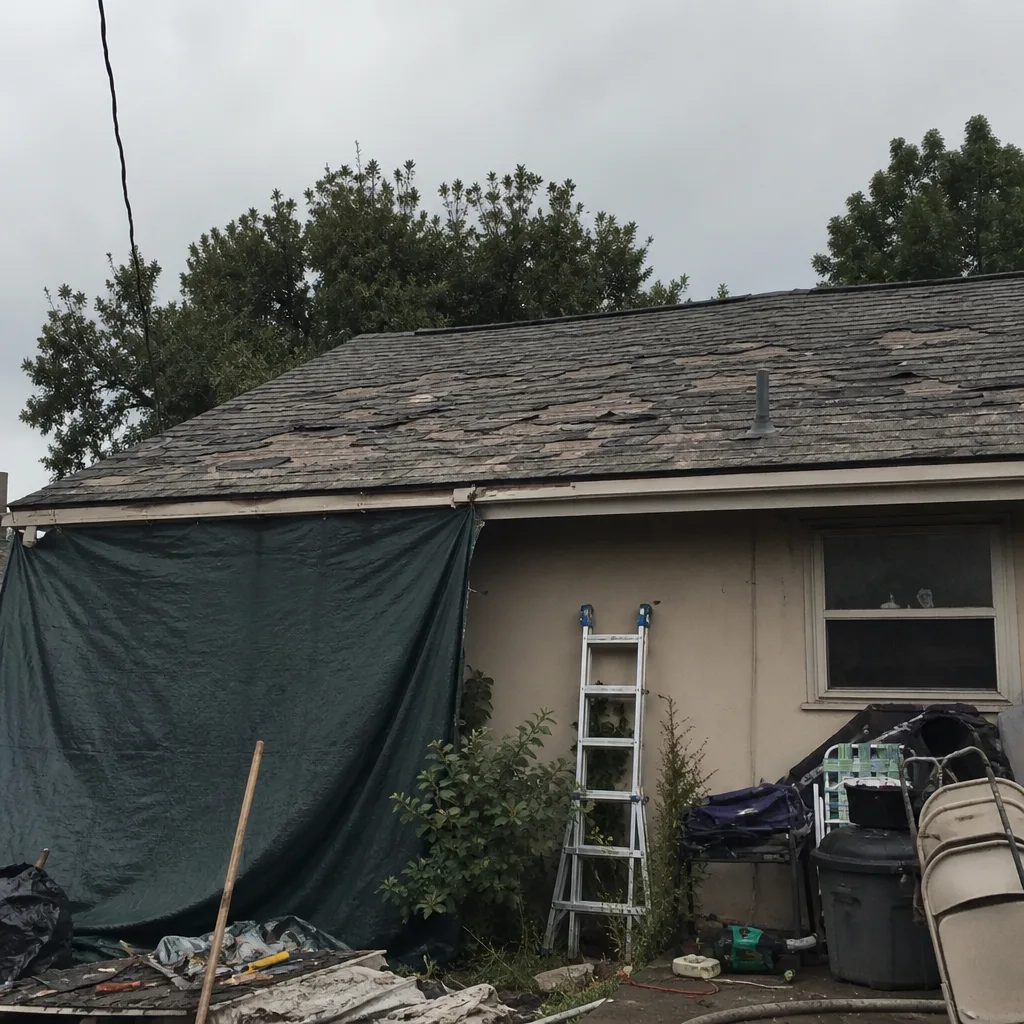 Before
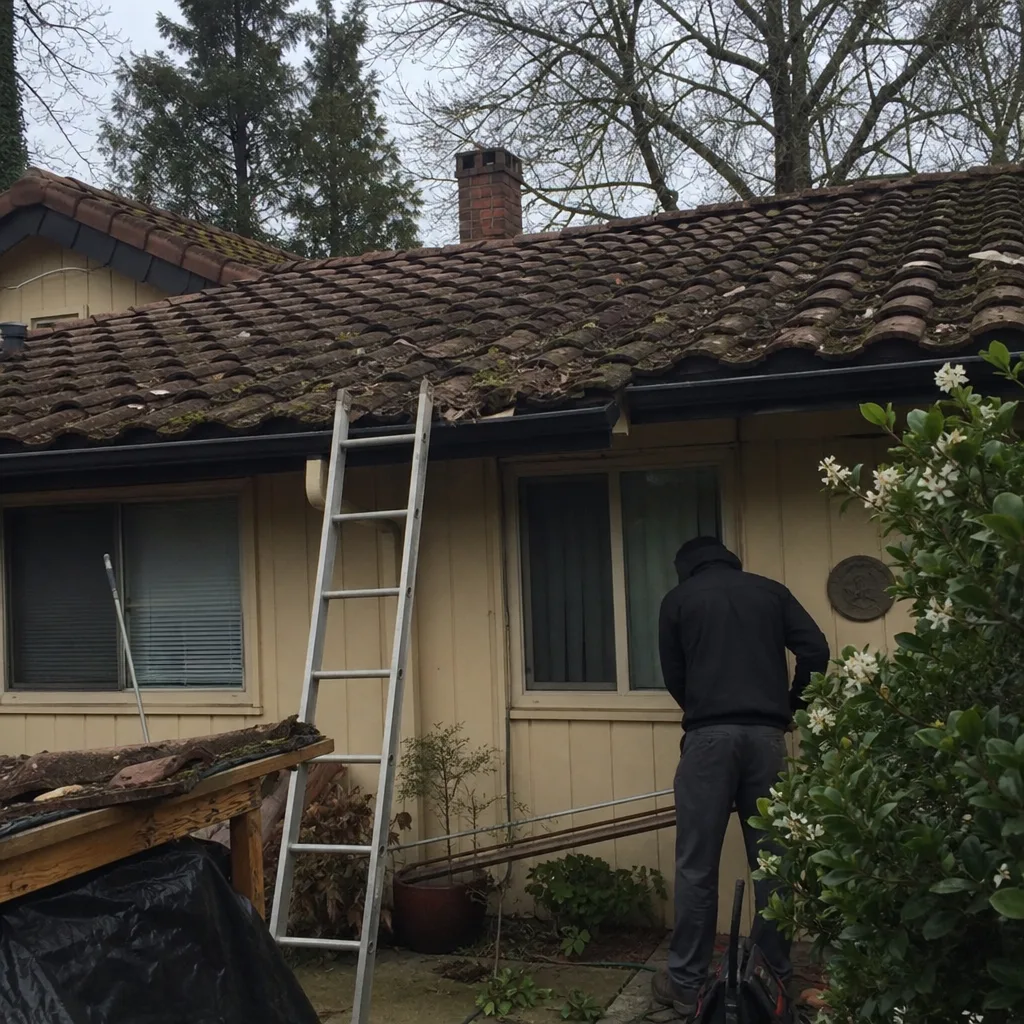
 After
 Before
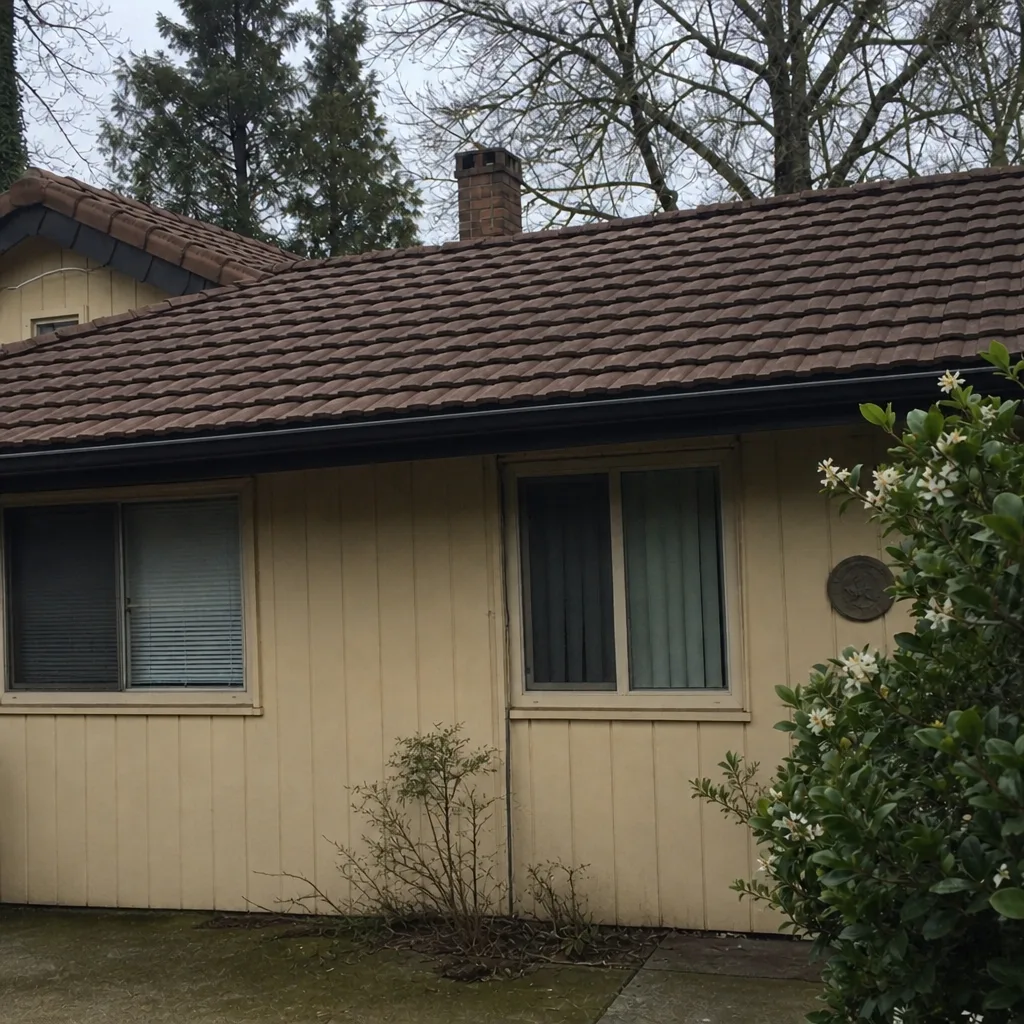 After
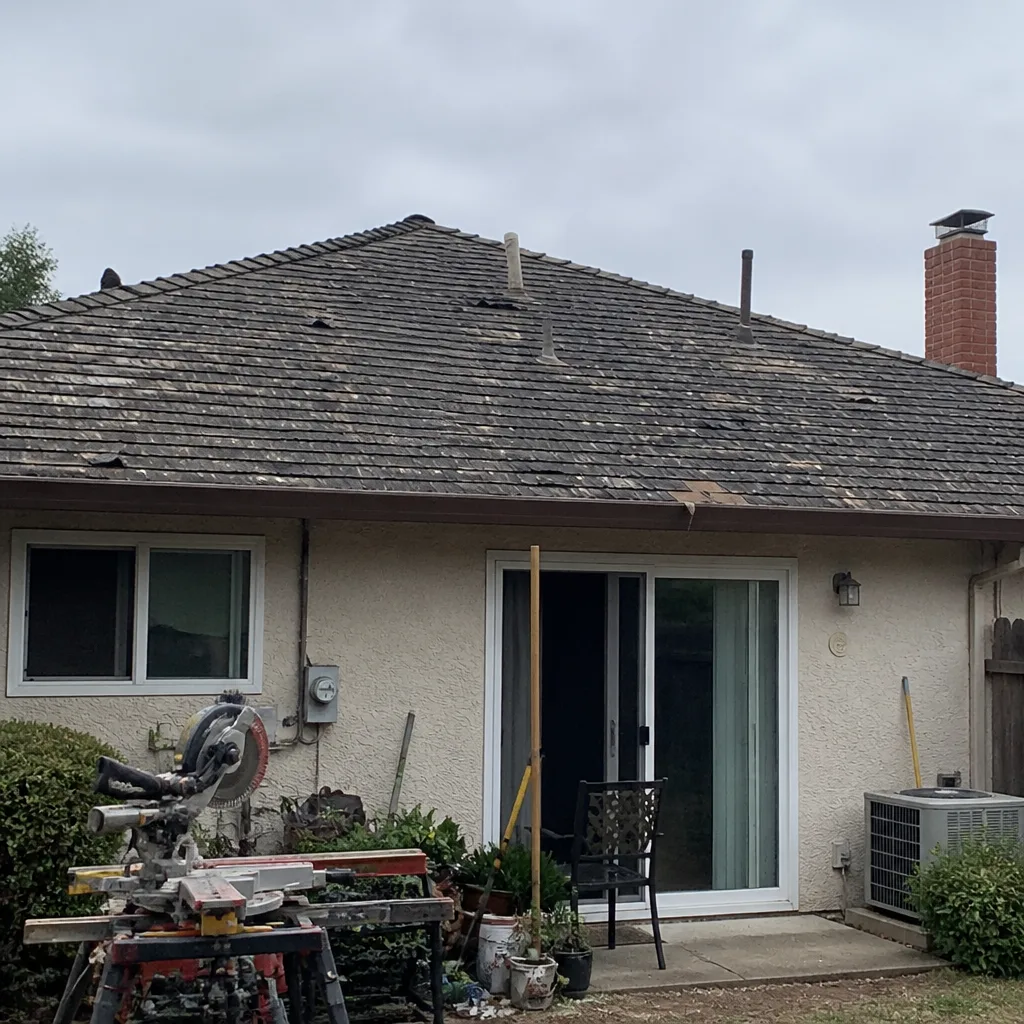 Before
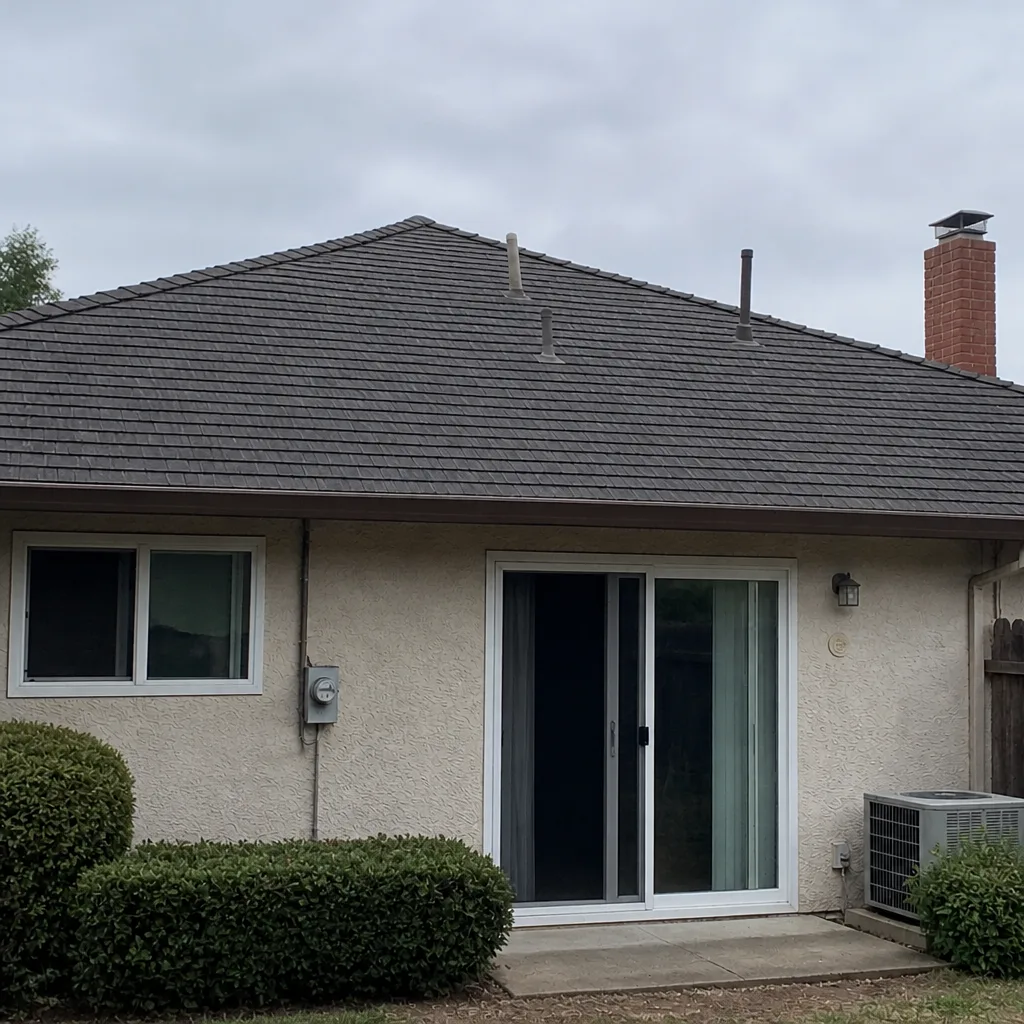 After
When to Call a Professional
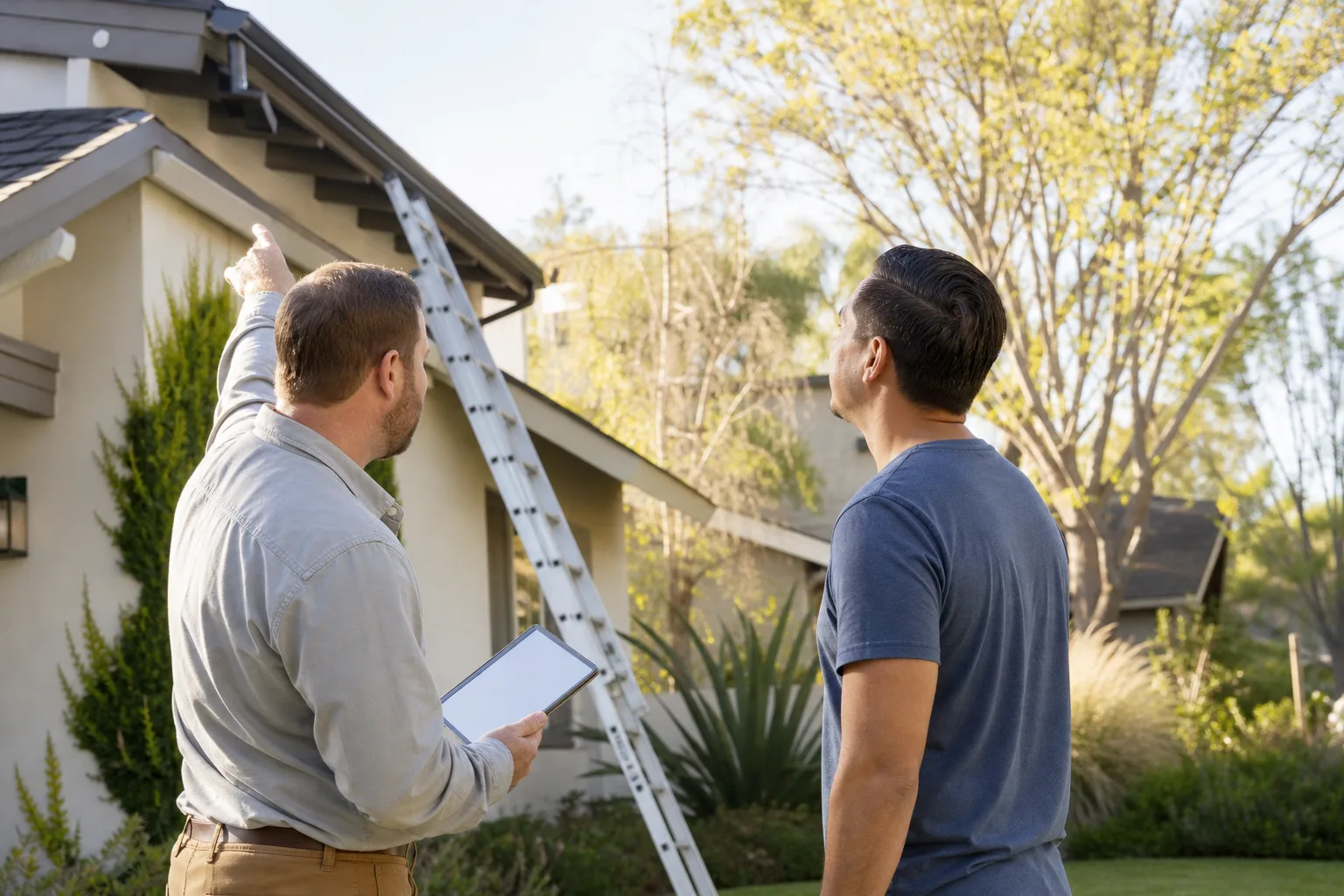
Call a professional when the scope clears a single shingle, when water is showing up inside the house, when the repair involves a valley, a chimney, a skylight, or anything you can’t access safely from a ladder, or when the roof is anywhere near the end of its rated life. Call when you’re planning a full replacement, because the permit and warranty picture alone makes the DIY math uncomfortable. And call when you’re not sure which category you’re in – an inspection is cheaper than a mistake.
Citrus Heights Roofing Co offers free estimates in Citrus Heights. Call (279) 321-0356. We answer 24/7. Fast dispatch from 7am to 7pm, Sunday through Friday. Our technicians have up to 8 years of experience, and the local pro is licensed and insured as their state requires. Estimates are free and the price is set per job by a written line-item quote, not a verbal number.
Frequently Asked Questions
In many cases no, especially for a full replacement. California’s owner-builder exemption allows a homeowner to do some work on their primary residence, but it doesn’t cover rental properties, usually doesn’t survive a sale within a year, and typically requires you to do the labor yourself rather than hire unlicensed help. Call (279) 321-0356 for a free estimate if you’d rather have a licensed professional handle it and pull the permit.
It can, depending on which warranty terms apply. Manufacturers like GAF, CertainTeed, and Owens Corning structure their enhanced workmanship and system warranties around licensed installation, so a DIY install may leave you with the basic material coverage only and no workmanship protection at all. Call (279) 321-0356 to talk through which manufacturer warranty fits your project.
Crews here typically quote replacement work by the square and by the material chosen, and the range shifts significantly between asphalt shingle, tile, and metal. Asphalt shingle installations from GAF, IKO, Atlas, or Tamko generally cost the least per square; tile and metal carry higher material and installation costs. There’s no honest number without a look at the roof, so call (279) 321-0356 for a free written estimate.
No – we’re closed Saturday. We’re open Sunday through Friday, 7am to 7pm. If you need an estimate, call (279) 321-0356 during those hours or any time for a booking.
Often, yes. A Citrus Heights buyer’s inspector will pull permit history, and past unpermitted roof work can stall a transaction mid-escrow or get flagged by a lender. If you’re planning a sale and aren’t sure how your roof was permitted, call (279) 321-0356 for a free inspection and estimate before you list.
Single-shingle replacement and gutter reattachment are the two repair categories genuinely within a careful homeowner’s reach, provided the surrounding shingles are sound and the roof is safely accessible. Valley work, chimney flashing, and anything that requires opening the deck should go to a professional. If you’re not sure which category your repair falls into, call (279) 321-0356 and we’ll talk it through.
No, those are considered different project types. A new roof installation refers to roofing a structure that’s never been roofed before, typically new construction, while a replacement – or re-roof – covers existing homes. Both are within our scope, and both follow the same manufacturer warranty and permit rules. Call (279) 321-0356 for a free estimate.
That depends on the home’s structure, the roof’s pitch, and what the homeowner wants from longevity versus budget. Asphalt shingle roofing is the most common for its balance of cost and performance, while tile and metal carry higher upfront costs and longer service lives. We install all three materials, and we’ll walk you through the comparison honestly rather than quoting from a single product line. Call (279) 321-0356 for a free estimate and a written line-item quote.
The Bottom Line
DIY roofing in Citrus Heights is a narrow option. California’s licensing and owner-builder rules are tighter than most tutorials suggest, manufacturer warranties hinge on licensed installation, and the realistic DIY savings calculation rarely survives once permit fees, tool rental, safety gear, disposal, and the probability-weighted cost of a mid-project mistake are counted. The safe DIY category is small: single-shingle replacement, gutter reattachment, minor flashing touch-ups. Everything above that scope is a job for a professional with a license, a permit, and manufacturer-backed coverage.
When you’re ready to make the call, we’re reachable through Citrus Heights Roofing Co – a contractor who installs shingle, tile, and metal from seven major manufacturers, handles both replacement and new installations, and carries manufacturer-backed warranty coverage instead of a verbal promise. Call (279) 321-0356. We answer 24/7. Fast dispatch from 7am to 7pm, Sunday through Friday. Estimates are free, and the written line-item quote sets the final price.
Written by the team at Citrus Heights Roofing Co.