Last updated November 25, 2026

Free roof inspection with deck photos before we talk money - GAF and Owens Corning certified installation
Roofing Emergency Preparedness Guide for Citrus Heights Homes
Here’s the counterintuitive part about roofing emergencies in Citrus Heights: the storm that pushes water through your ceiling isn’t usually what broke the roof. The damage started months earlier, in August, when afternoon heat baked the sealant around your flashing and dried out the caulk along your pipe boots. The rain just found it. Most emergency guides start at the storm. This one starts in summer, because that’s where the leak does. Below you’ll find the two failure patterns Citrus Heights roofs actually follow, a pre-season checklist built around the first October rain, safe ways to document damage for an insurer, what a real tarp job looks like next to a storm-chaser upsell, and a decision tree for the first 48 hours.
Quick Answer
A roofing emergency in Citrus Heights almost always has one of two causes: sudden storm damage during the rainy season, or slow heat degradation from summer that only shows as a leak after the first significant fall rain. Prepare in late summer by inspecting sealants, flashing, and boots; when damage happens, document it safely from the ground, tarp only to stop active intrusion, and call a roofer before you sign anything. Call (279) 321-0356 for a free estimate.
Styles & brands we work with
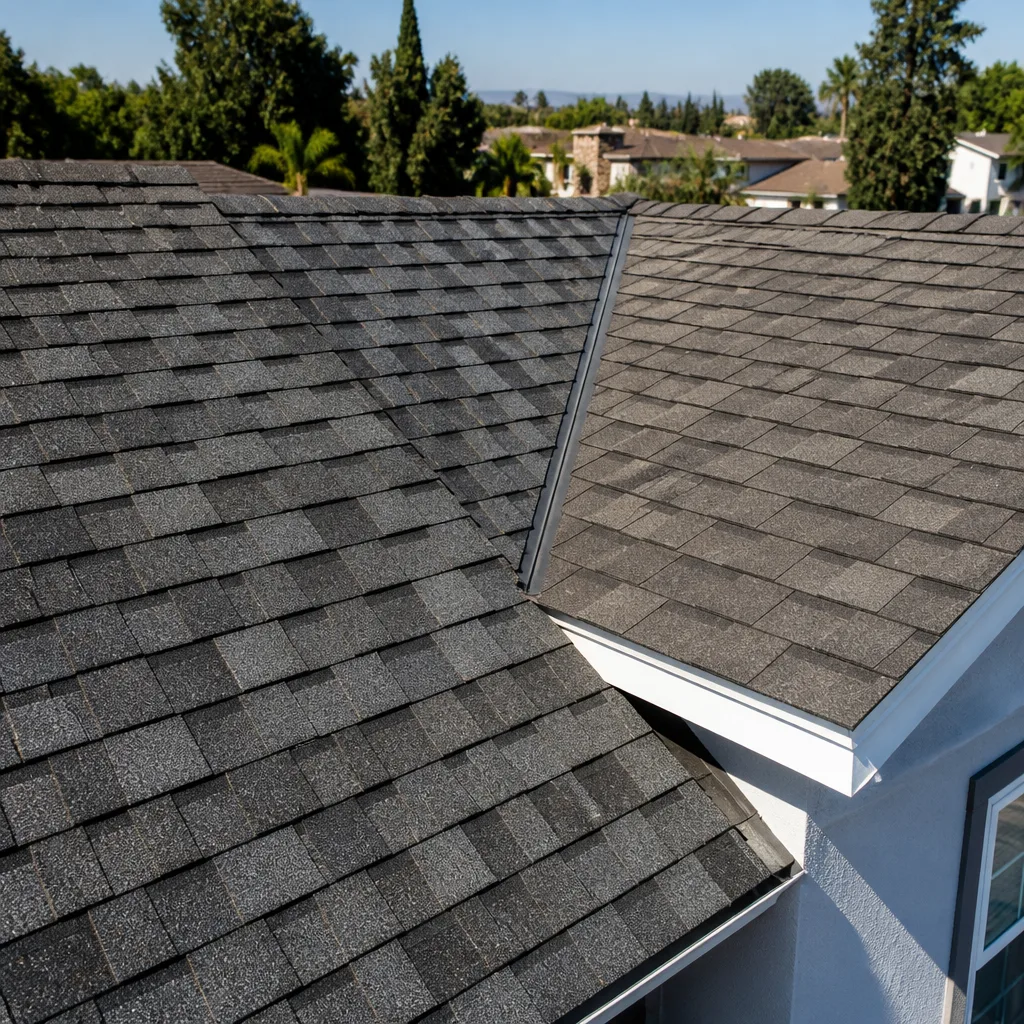
- Architectural shingles
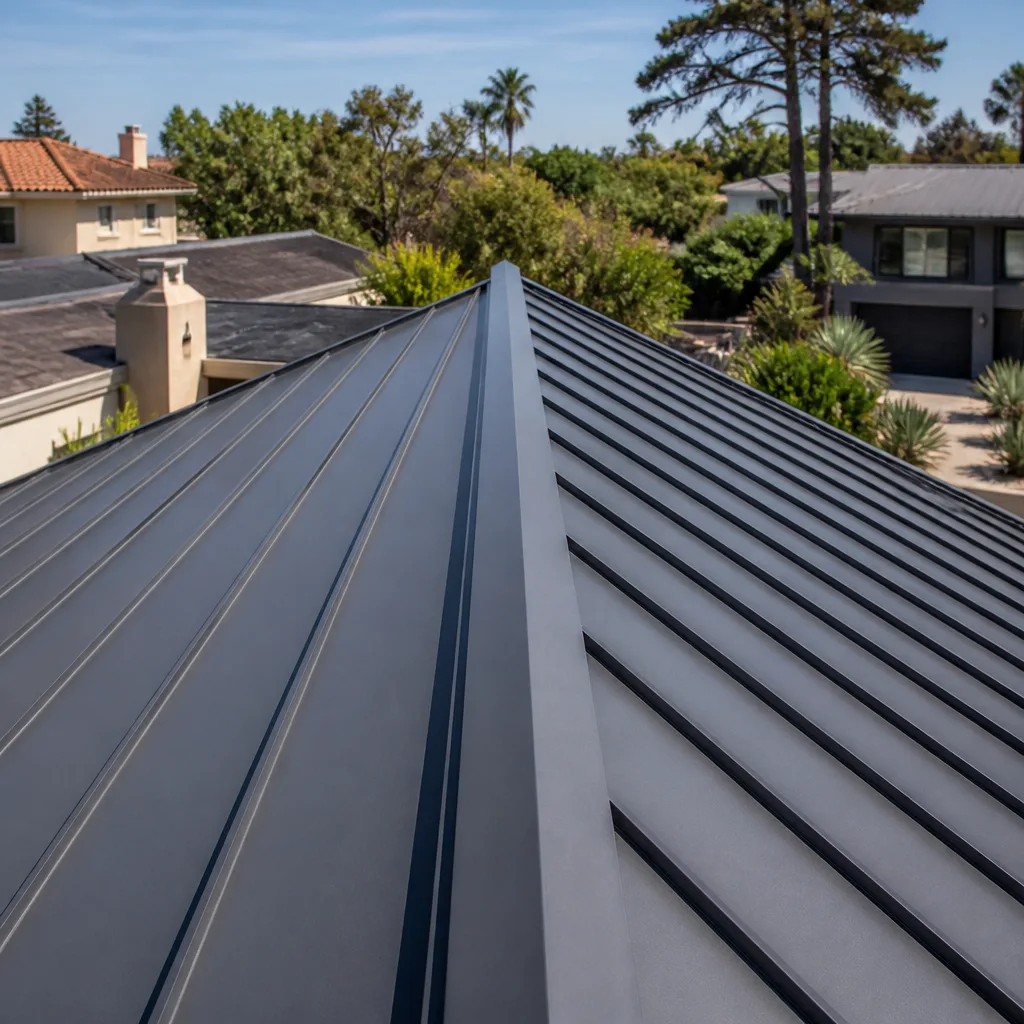
- Metal roofing
- Tile roofing
- GAF
- Owens Corning
- Flat & low-slope
Table of Contents
- The Two Roofing Emergencies Citrus Heights Homes Actually Face
- How Summer Heat Becomes an October Leak
- Your Pre-Season Checklist for October in Citrus Heights
- How to Document Active Roof Damage Safely
- Emergency Tarping vs. Storm-Chaser Upsells
- The California Insurance Claim Process for Roofing
- The First 48 Hours: Who to Call and What Not to Sign
- When an Emergency Becomes a Replacement Decision
The Two Roofing Emergencies Citrus Heights Homes Actually Face
Most roofing emergency advice you’ll find online assumes one scenario: a storm hits, something breaks, you call somebody. Citrus Heights doesn’t work that way. The weather here produces two distinct failure patterns, and each needs a different response.
Type one is the acute event. A strong winter storm pushes driven rain under shingles, tears a few loose, or drops a limb on the roof surface. This is the emergency everyone recognizes. It’s loud, it’s obvious, and it usually brings a call the same day.
Type two is the deferred one. Months of dry Sacramento Valley heat work quietly on the parts of your roof that hold water out without being visible from the street: flashing laps, pipe boot collars, valley sealants, and the adhesive strips on older shingles. Nothing leaks, because nothing is falling. Then the first meaningful rain of the season arrives in October and finds every one of those soft spots at once.
That second pattern catches Citrus Heights homeowners off guard, and it’s the one most guides skip. If you’ve ever had a ceiling stain appear during the first real storm of the year and wondered why the roof “suddenly” failed, it didn’t. The failure was building all summer. The difference matters for how you prepare and who you call, and it’s the reason this guide starts in summer rather than at the storm.
Both patterns lead to the same place: water inside a home that isn’t built to shed it. The response, though, is different. Acute damage needs containment before anything else. Deferred damage needs a proper inspection, because the visible leak is rarely the only weak point.
How Summer Heat Becomes an October Leak
August in Citrus Heights is a stress test. Day after day in triple digits, with the roof surface running hotter than the air. Roofing materials are engineered to handle it, but heat is cumulative, and it attacks the soft, flexible parts first.
Here’s what degrades during a hot summer:
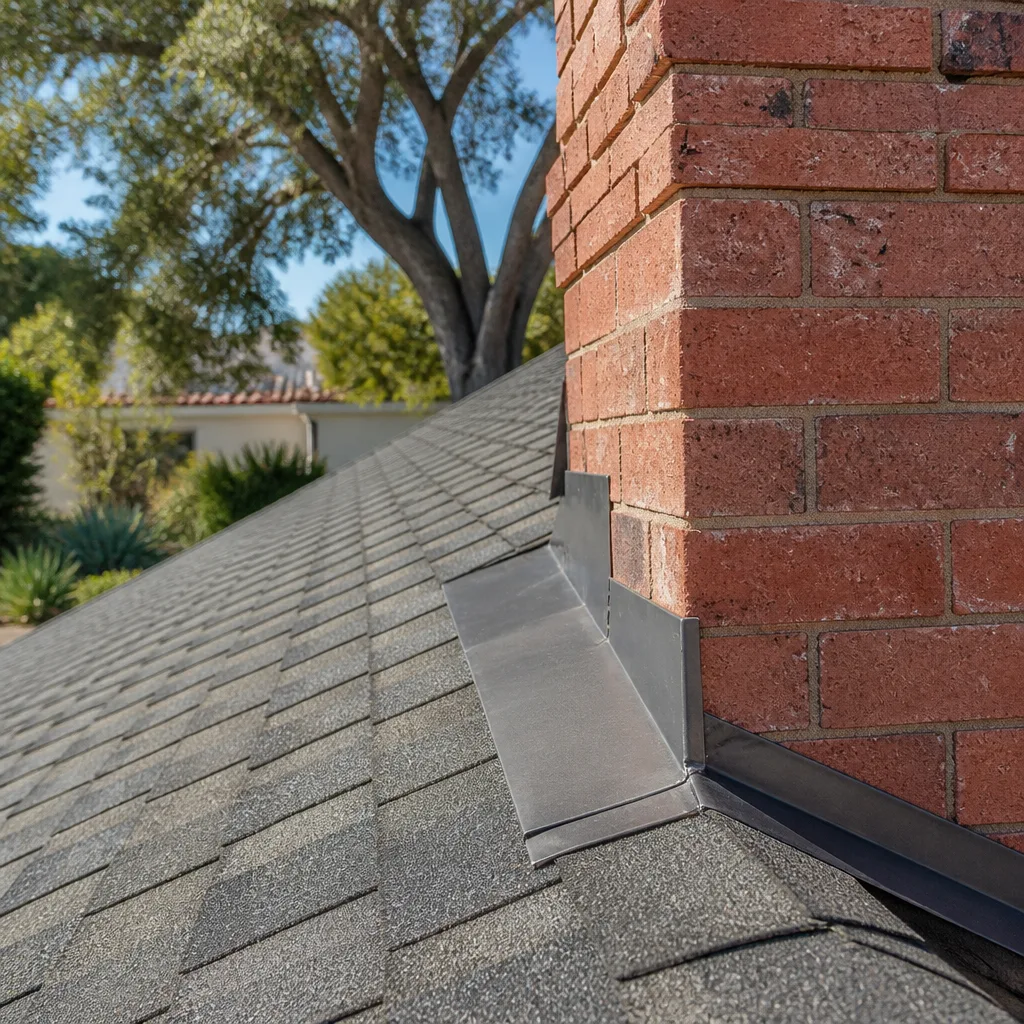
- Sealants and caulking around flashing, vents, and skylights dry out, shrink, and pull away from the surfaces they were bonded to. A hairline gap is nothing in July. It’s a water channel in October.
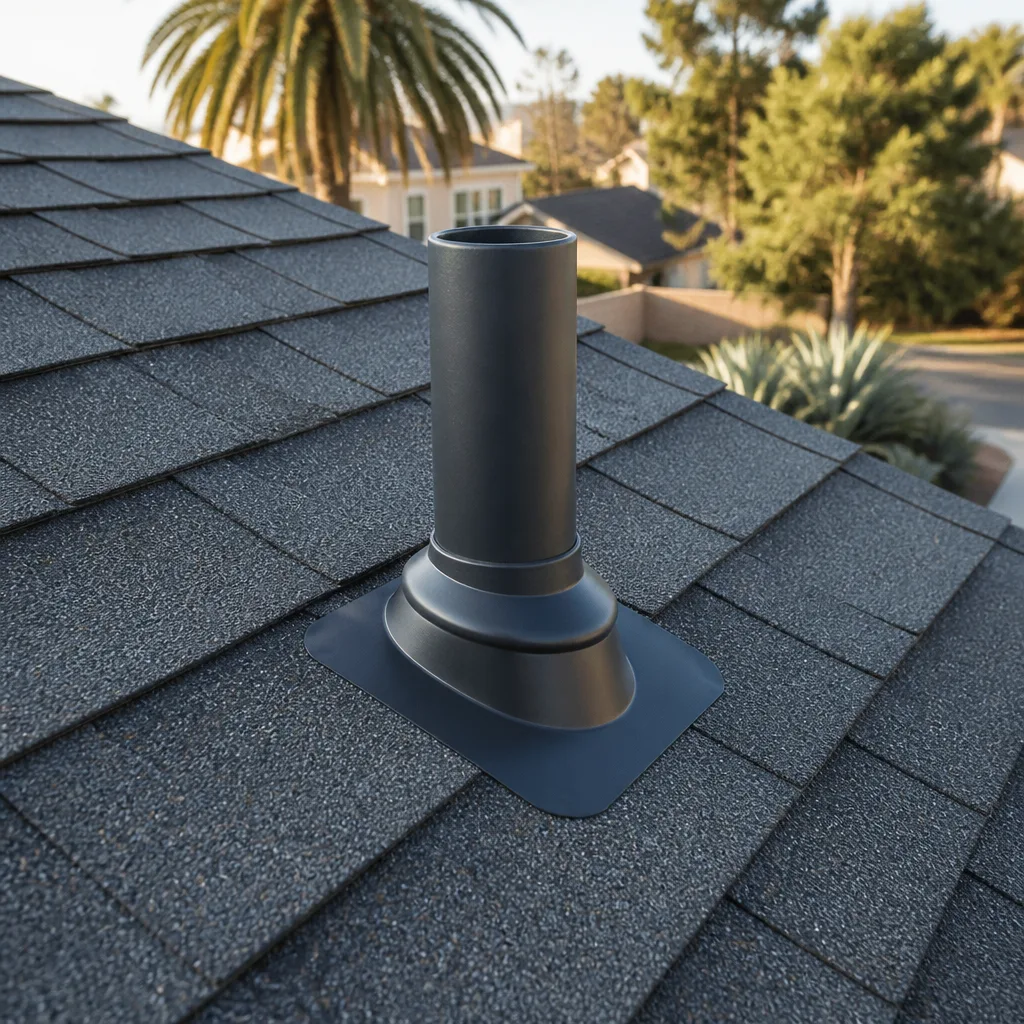
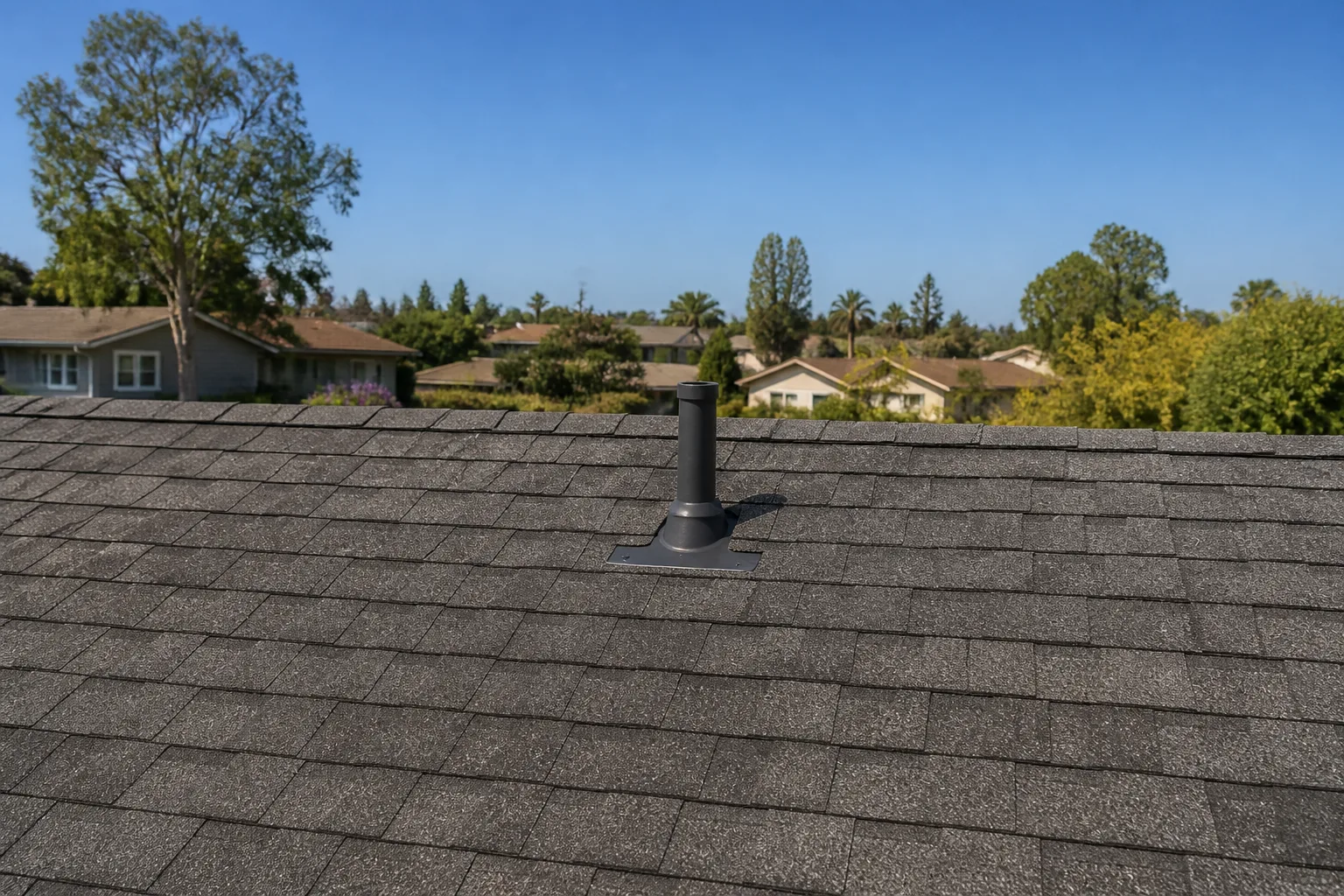
- Pipe boot collars lose their elasticity. The rubber or plastic collar that seals around a plumbing vent hardens and cracks. This is one of the most common small leaks on aging roofs.
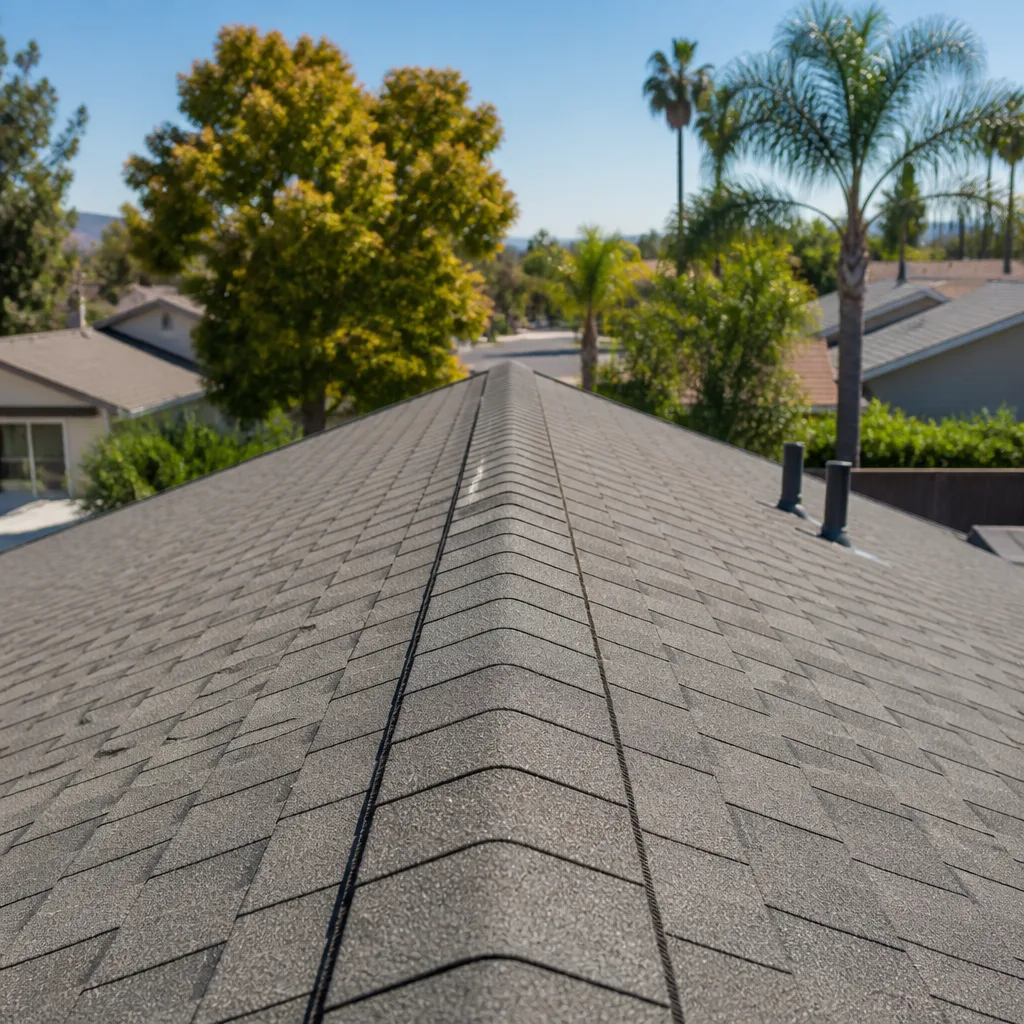
- Asphalt shingle adhesive strips soften in heat. On a shingle roof, the sealant that bonds each tab to the one below can let go, leaving tabs loose and ready for wind to lift.
- Fasteners and metal components expand and contract through the daily swing from hot afternoon to cool night. Over a season, that motion loosens what should be tight.
None of this shows up on a dry day. That’s exactly why it’s easy to ignore. The first storm of the season is a diagnostic event, and it’s a rough one, because it tests the whole roof at once rather than the one spot you happen to notice.
Tile roofs aren’t immune either. The underlayment beneath the tile does the actual waterproofing, and heat ages it. Boral tile systems we install rely on that underlayment holding up, and on the tile above staying correctly aligned. When tiles shift, water gets underneath and the underlayment has to carry it. Metal roofs shed heat better and hold up well in this climate, but their fasteners and sealant washers are still heat-exposed parts that benefit from an inspection before the rain.
The takeaway is straightforward: if your roof is more than a few years old and it hasn’t been looked at since last spring, the damage window is already open. A pre-season inspection is cheaper than an emergency tarp.
Your Pre-Season Checklist for October in Citrus Heights
The highest-probability damage window here is the first significant rainstorm of the season, and in the Sacramento Valley, that typically means October. Your preparation should be finished before then, not started when the forecast turns.
Work through this list in late summer or early fall:
- Walk the perimeter from the ground. Look for lifted, missing, or cracked shingles, displaced tiles, dented or loose metal panels, sagging, and any staining on fascia or soffit. Binoculars are your friend.
- Check the ceiling inside. Look at the top floor and attic for water stains, discoloration, or peeling paint. Any of these suggests water is already getting in.
- Inspect the attic in daylight. Look up at the underside of the roof deck for daylight showing through and for dark streaks or damp spots. Both point to a breach.
- Clear the gutters and downspouts. Blocked gutters push water back under the roof edge. This is one of the simplest things you can do and one of the most commonly skipped.
- Trim overhanging limbs. Branches that touch or hang over the roof scrape shingles in wind and become projectiles in a storm.
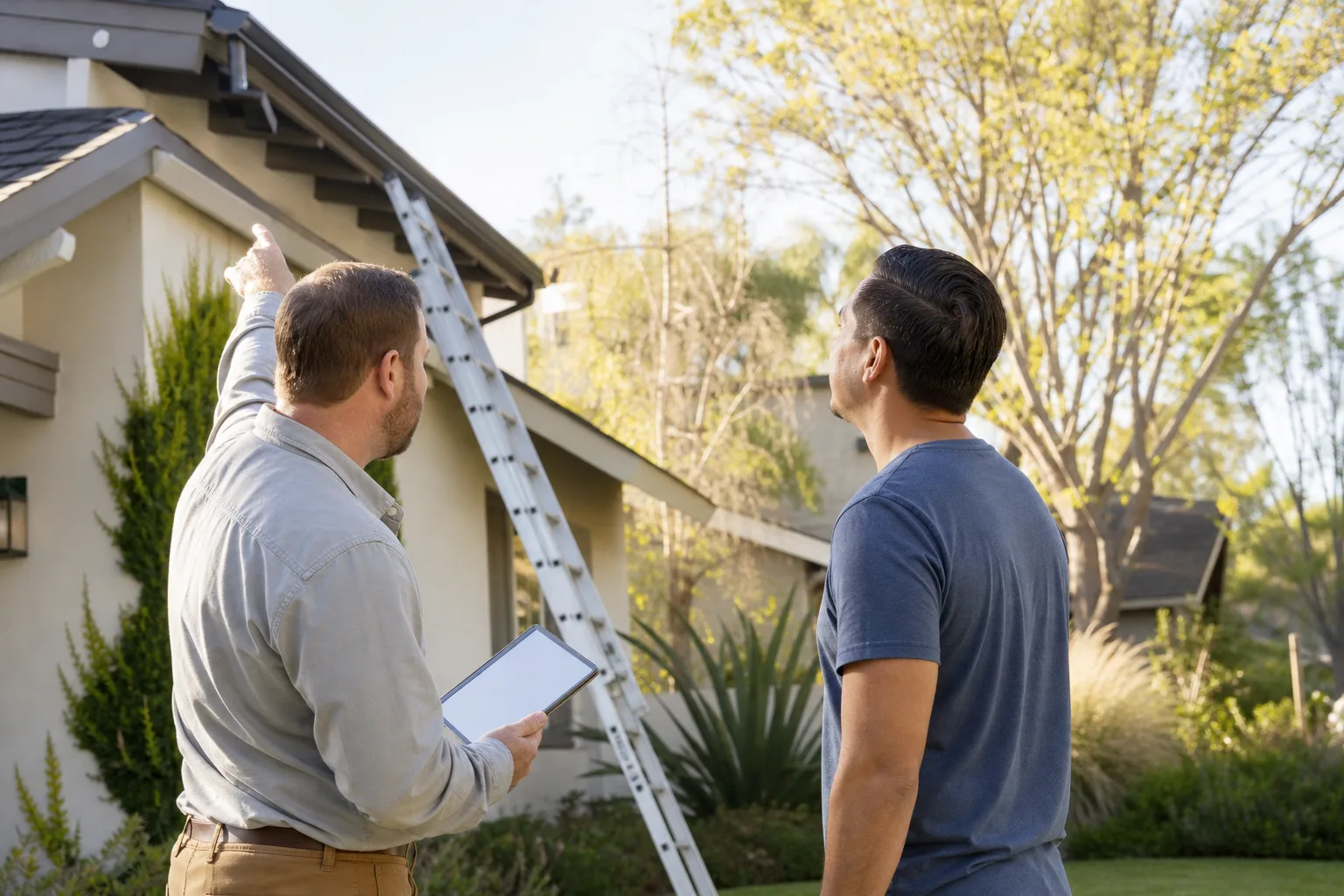
- Get a professional inspection. A trained eye finds heat-damaged sealants, cracked boots, and lifted flashing that you can’t see from the ground. This is the step that catches the deferred summer damage before the rain finds it.
A roof inspection before the season costs a fraction of an emergency repair, and it lets you make a replacement decision on your schedule rather than in the middle of a storm.
If an inspection turns up enough wear that you’re weighing a repair against a full roof replacement, better to know that in September than in a downpour.
How to Document Active Roof Damage Safely
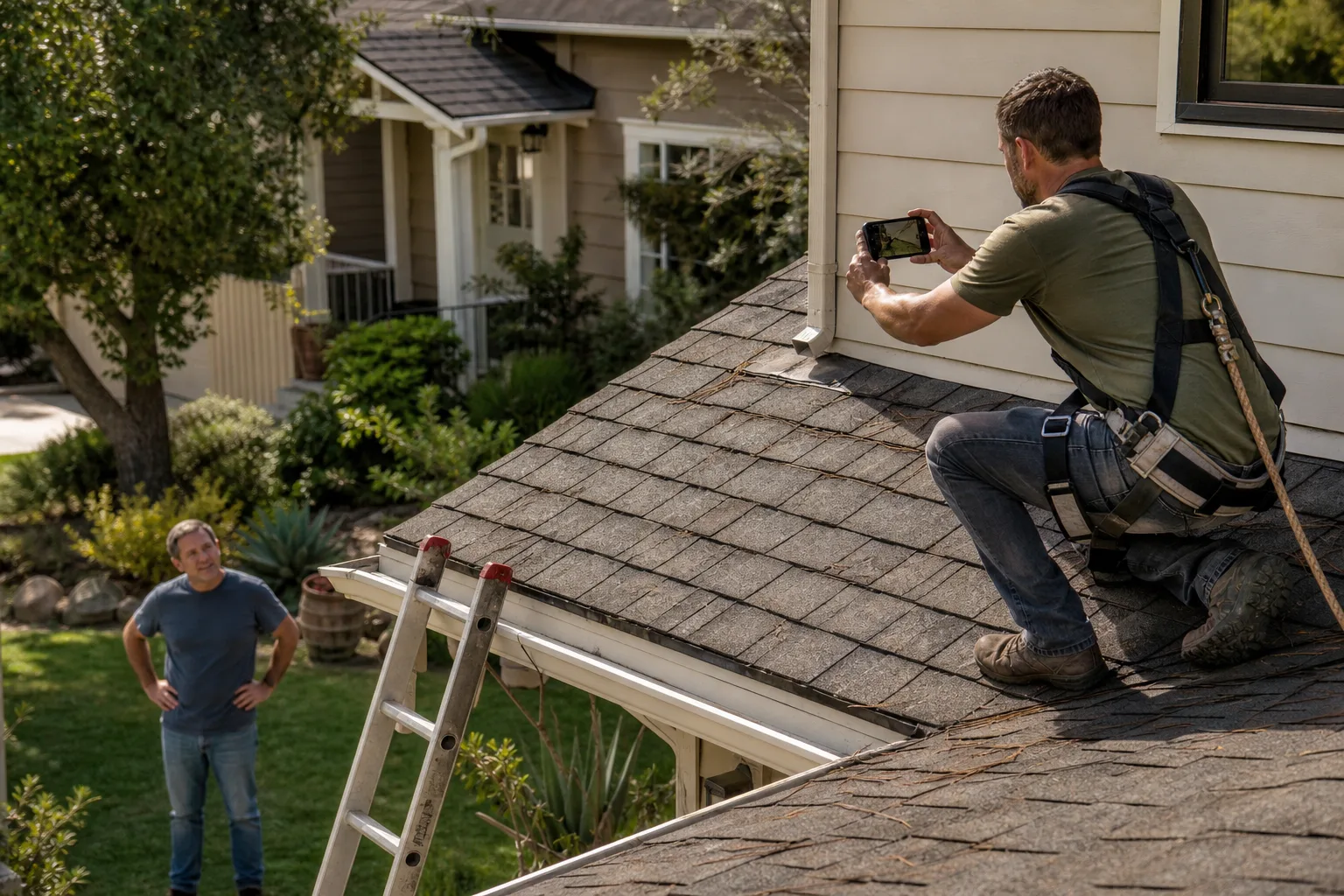
When damage is happening, the instinct is to get up on the roof and take pictures. Don’t. Wet roofing is slick, and a fall is a genuinely serious injury. You can document almost everything you need for a claim without leaving the ground.
Here’s how to capture what an insurer will ask for, safely:
- Shoot from the ground and from windows. Wide shots of the roof, close-ups of visible damage, and photos of any water intrusion inside the home.
- Photograph the interior. Ceiling stains, dripping, wet insulation, and damaged possessions all support the claim. Get clear shots with something for scale if you can.
- Record a short video walkthrough. Pan the affected rooms and the exterior from the yard, narrating what you see and when it started.
- Save debris and receipts. Keep any fallen material and any receipts for temporary measures like buckets or fans.
- Note the time and date. Damage timelines matter to adjusters.
- Don’t climb on a wet, damaged, or steep roof. If a shot truly requires being up there, wait for a professional. No photo is worth that risk.
Take a moment to think about your own safety inside the home too. If water is pooling near electrical fixtures, outlets, or the panel, stay clear and turn off power to the affected area if you can do so safely. Water and electricity don’t mix, and this is a case where calling a professional is the right call rather than handling it yourself.
Emergency Tarping vs. Storm-Chaser Upsells
Tarping has one purpose: keeping water out while you wait for a proper repair. That’s it. When it’s done right, it’s a temporary measure, and it should be scoped, priced, and documented as one.
Here’s what a legitimate emergency tarping and temporary repair scope looks like:
- A clear explanation of what’s being covered and why, based on an actual look at the damage
- Secure, weighted, or mechanically fastened tarping that will survive wind, not a loose sheet draped over the peak
- A stated scope that treats the tarp as temporary and identifies the permanent repair needed
- Clear documentation (photos before and after) that supports your insurance claim
- A written estimate and a clear explanation of the price before work starts
Now here’s what storm-chaser behavior looks like, and it shows up in the Sacramento area after every significant weather event:
- Knocking on doors right after a storm, offering a “free inspection” that always finds a problem
- Pressure to sign a contract on the spot, often before any real inspection
- A price quoted without a written, itemized scope
- A push toward a full replacement when a repair would do
- Requests for a large deposit up front, or a promise to “handle the insurance for you”
The rule of thumb: tarping is a legitimate, temporary service. Any company that treats a storm as a sales opportunity and pushes you to sign in the first 48 hours is worth a second look. You can always call another roofer, including a Citrus Heights company that will still be answering the phone after the storm coverage ends. We answer 24/7, and our technicians have up to 8 years of experience handling exactly this kind of triage.
The California Insurance Claim Process for Roofing
A California homeowner’s insurance claim for roof damage usually comes down to one thing: whether the adjuster and the contractor agree on the scope. Understanding how that plays out will save you a lot of frustration.
Here’s the process in order:
- Report the damage to your insurer. Do this after you’ve stopped active water intrusion and documented the damage. Your policy has reporting timelines, so don’t sit on it, but you also don’t need to report before you know what’s happening.
- Read your policy first. Understand your deductible and what’s covered for your type of roof. Coverage for storm damage differs from coverage for wear and tear, and the two get confused constantly.
- Get your own contractor’s written scope. Before the adjuster visits, have a roofer inspect and write up exactly what’s damaged and what it takes to fix it. A written, itemized scope is your strongest document.
- The adjuster inspects and writes their scope. The adjuster works for the insurer and writes an estimate. Your contractor’s scope and the adjuster’s scope will almost never match perfectly.
- Compare the two scopes line by line. This is where the disagreement usually lives. The adjuster may scope a repair where your contractor sees a replacement, or the two may disagree about what caused the damage or which materials are required.
- Resolve the gap. Your contractor explains the difference to the adjuster, often with photos and measurements. Most gaps close at this stage through documentation. If they don’t, you can request a re-inspection or, in some cases, a review of the claim.
The single most useful thing you can do is get your own contractor’s written scope before the adjuster writes theirs. Walk in with documentation and the conversation is about facts. Walk in without it and the conversation is about the insurer’s version.
One more note: if your roof needs replacing, the materials matter for the claim and for what comes after. Working with manufacturers whose products carry long-term warranties, whether it’s a GAF system or a Tamko option, means your new roof has protection that outlasts the job.
The First 48 Hours: Who to Call and What Not to Sign
When water is coming in, decisions feel urgent, and that’s exactly when people sign things they regret. Here’s a simple decision tree for who to call first.
Call a roofing contractor first if:
- Water is actively entering the home and you need the flow stopped
- You’ve found a leak but don’t yet know what’s causing it
- You’re unsure whether the damage is going to justify a claim at all
- Your deductible is close to the likely cost of the repair
Call your insurance company first if:
- There’s clear storm damage that’s likely to be covered
- The damage is widespread or the repair is likely well beyond your deductible
- You need to know the reporting deadline and coverage terms under your policy
In many cases the right answer is both, in order: contractor to stop the water and document, insurer to open the claim. But the key sequence is contractor scope before adjuster scope whenever practical.
What not to sign in the first 48 hours:
- Nothing with a big deposit and no written scope. If you can’t see an itemized estimate, don’t sign.
- Nothing that hands over your claim. Some agreements assign your insurance benefits or make the company your representative. Understand exactly what you’re agreeing to.
- Nothing from a door-knocker. Take the card, thank them, and call a company you’ve vetted.
- Nothing that requires a replacement before a real inspection. A tarp to stop water isn’t the same as a signed replacement contract.
Call (279) 321-0356. We answer 24/7. Fast dispatch from 7am to 7pm, Sunday through Friday. A call outside dispatch hours is booked into the next opening. Estimates are free and give you a written scope to work from.
When an Emergency Becomes a Replacement Decision
Not every emergency ends in a replacement. Some do, and it’s worth knowing how to tell before you’re sitting in a storm.
An emergency repair is the right call when the damage is localized: a damaged pipe boot, a torn section of flashing, a few lifted shingles, or a single damaged valley. These are contained problems with contained fixes.
Replacement comes into the picture when the roof is broadly worn and the “emergency” is really the first leak in a roof that was on its way out anyway. Clues include multiple leaks in different areas, widespread heat damage to sealants and boots, tabs that have been loose for more than one season, and an overall age where one repair tends to lead to the next.
That’s when the decision shifts from triage to choosing a roof. This is where the multi-material approach matters. A shingle roof, a tile roof, and a metal roof behave differently in Citrus Heights heat and storms, and the right choice depends on your home’s structure, your exposure, and your budget, not on what’s easiest to install. Whether you’re leaning toward a shingle roofing system or weighing tile or metal, we install all three, which means the recommendation comes from what fits your home.
When it’s time to start over, a new roof installation and a replacement on an existing roof are different projects, and we handle both. Seven brands (GAF, CertainTeed, Owens Corning, IKO, Atlas, Tamko, and Boral) across three materials means genuine choice rather than a take-it-or-leave-it quote.
Common Mistakes to Avoid
- Waiting for the roof to leak before inspecting it. By the time a leak shows up in Citrus Heights, the summer damage is already done. Inspect before the first fall rain, not after.
- Climbing onto a wet roof to take photos. A fall is a serious injury, and you can document everything you need from the ground and from windows.
- Signing with the first storm-chaser who knocks. These operations show up after every significant weather event in the Sacramento area. Take the card and call a company you’ve vetted.
- Calling the insurance company before you know the scope. Get a contractor’s written scope first so your claim starts with documentation instead of guesswork.
- Confusing a tarp with a fix. Tarping is temporary. If it’s presented as a permanent solution, that’s a warning sign.
- Ignoring interior signs. A small ceiling stain in a Citrus Heights home in October is telling you something happened over the summer. Treat it as a signal, not a cosmetic issue.
- Choosing a roof based on what a single contractor stocks. If a company only offers one material, that’s what you’ll be sold regardless of whether it fits your home.
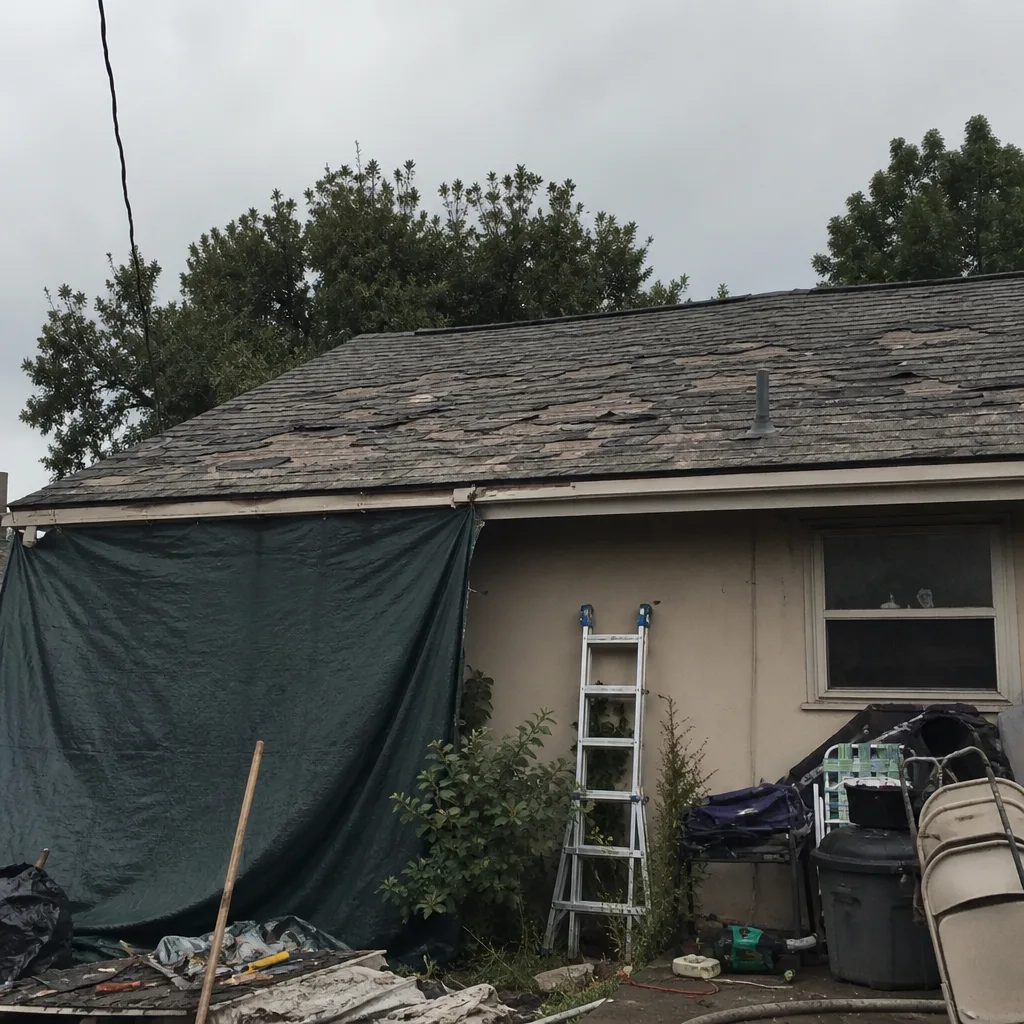
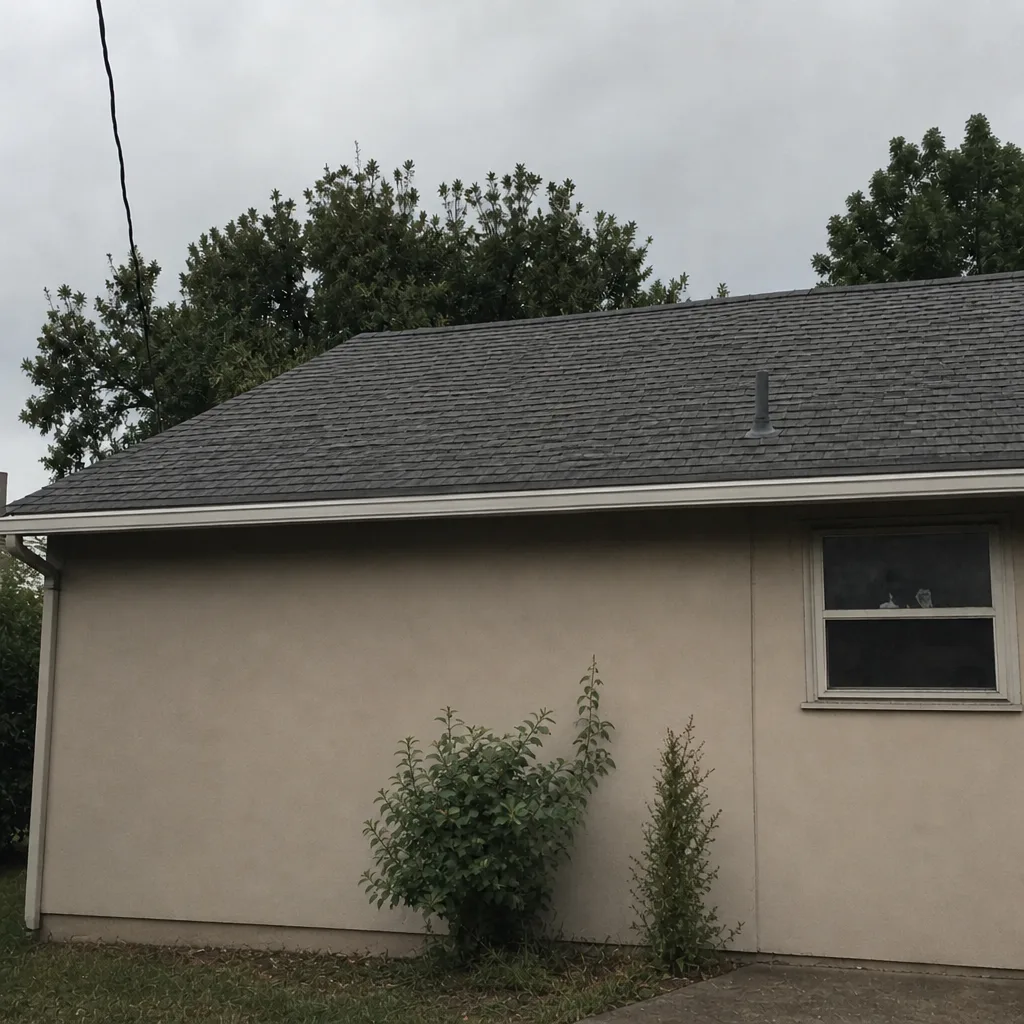
See the difference
 Before
 After
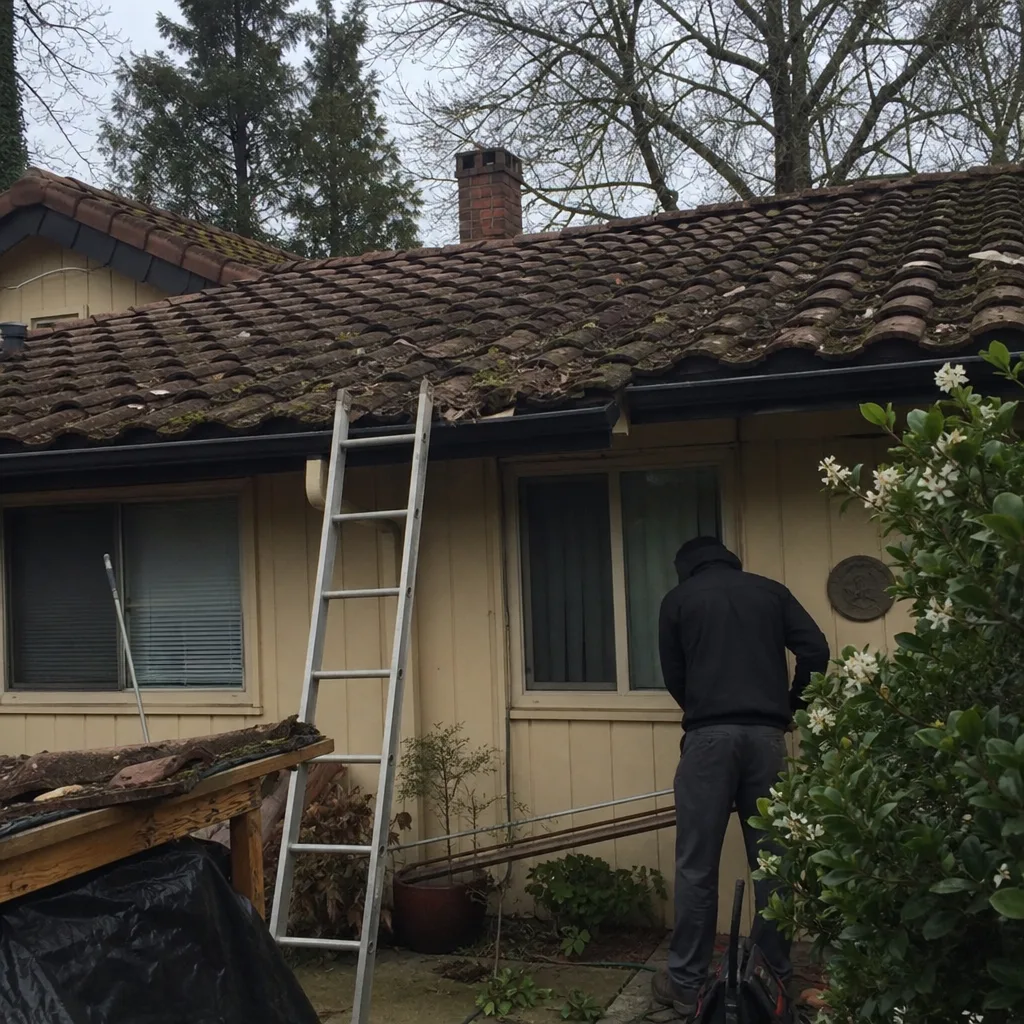 Before
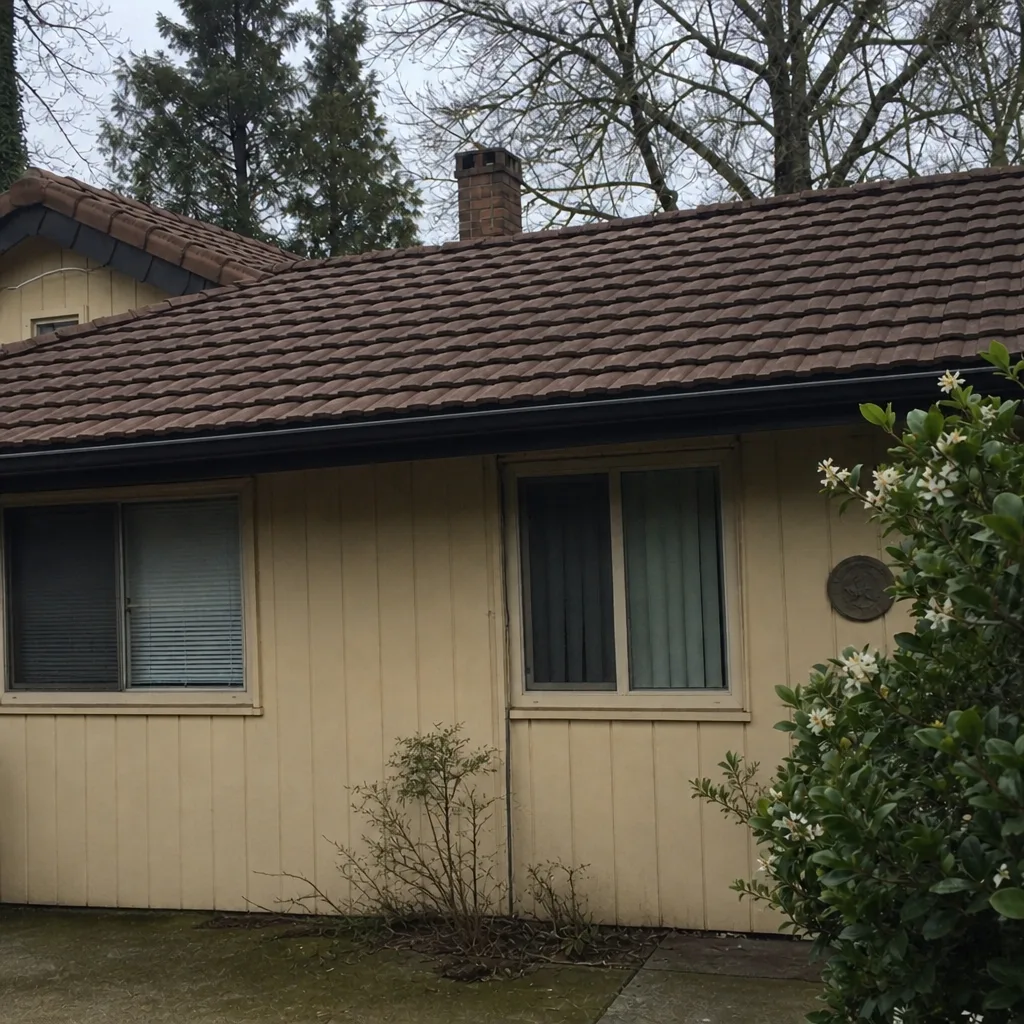 After
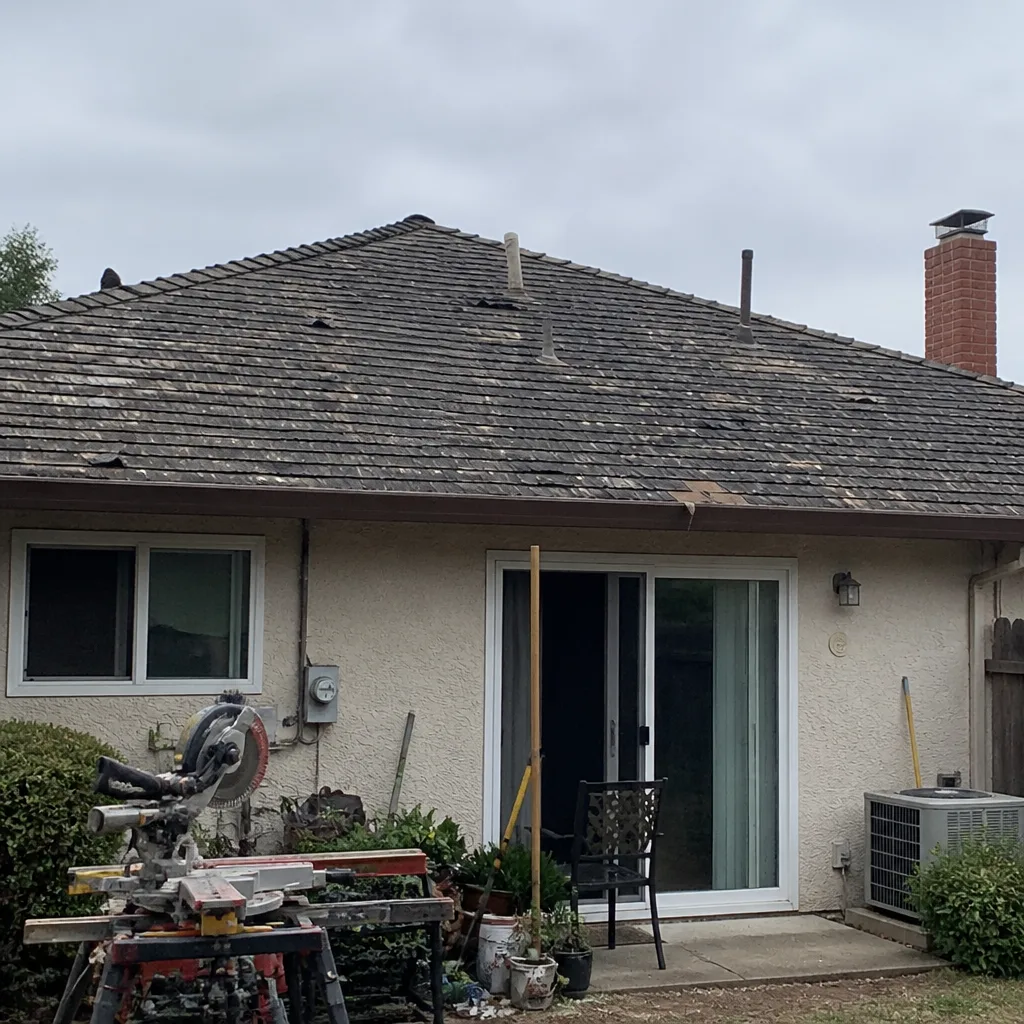 Before
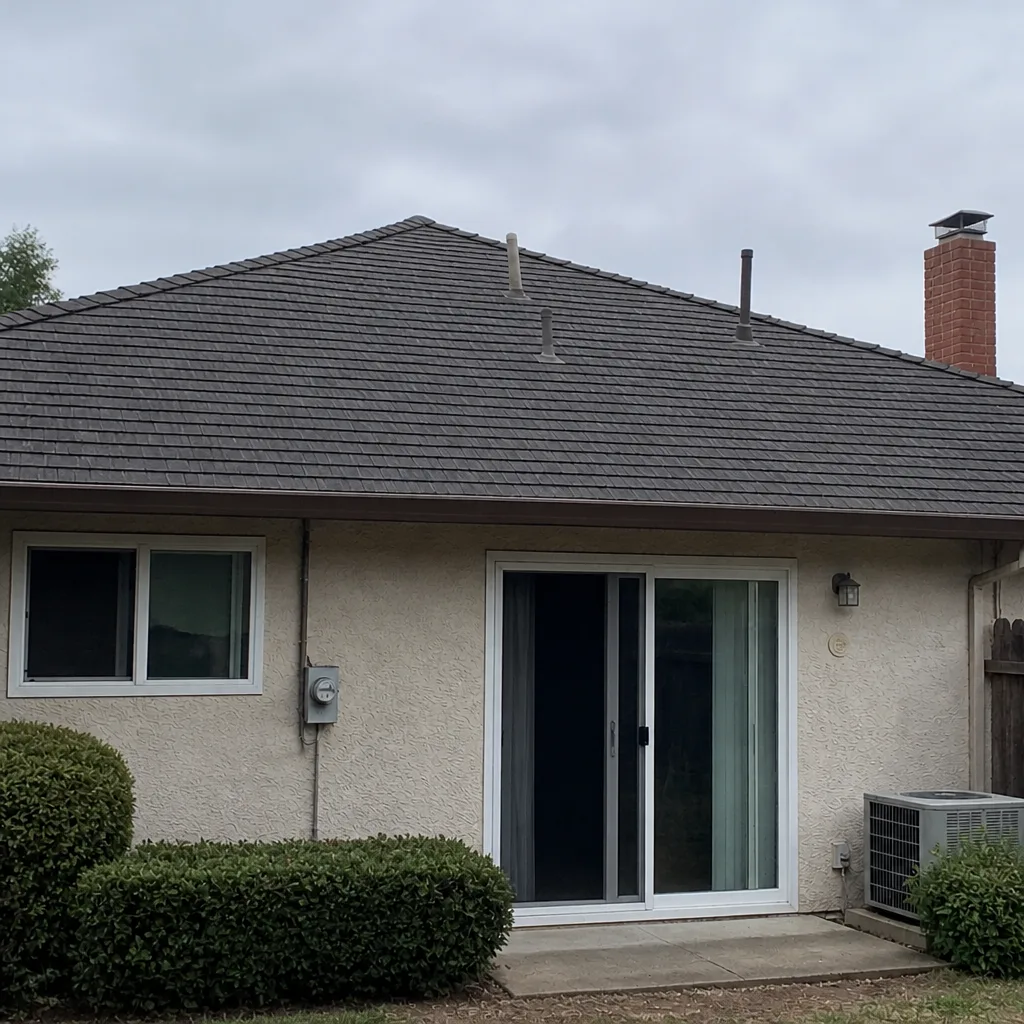 After
When to Call a Professional
Call a professional immediately when water is actively entering the home, when you can see lifted or missing shingles after a storm, when a limb or debris has landed on the roof, or when any interior stain appears and grows. Also call when you’re unsure: an inspection is cheap compared to the damage an unaddressed leak causes. If a door-knocker has offered a free inspection and you feel pressure to sign, step back and get a second opinion from a company you’ve chosen. Citrus Heights Roofing Co offers free estimates in Citrus Heights. Call (279) 321-0356. We answer 24/7. Fast dispatch from 7am to 7pm, Sunday through Friday.
Frequently Asked Questions
Stop the water and make the call, in that order. Move valuables, place buckets, and keep clear of any water near electrical fixtures, then call a roofing contractor to contain the leak and document it. Don’t climb onto a wet roof. Call (279) 321-0356 for a free estimate; we answer 24/7, with fast dispatch from 7am to 7pm, Sunday through Friday.
Because the damage happened in summer and the first real rain of the season found it. Triple-digit heat dries out sealants, cracks pipe boots, and loosens shingle tabs, but nothing leaks until water arrives to test those weak points. In Citrus Heights, the first significant fall rain is typically the moment the roof’s hidden wear becomes a visible leak.
Call a roofer first if water is actively entering and you need it stopped, and call your insurer first if there’s clear storm damage likely to be covered. In most cases you’ll do both, but having your contractor’s written scope before the adjuster visits puts the claim on documented facts. Call us for a free written estimate to start.
Only if you can do it safely from the ground or from a stable position without climbing on the roof. Wet roofing is slick and a fall is a genuine danger, so in most cases professional tarping is the safer choice. A proper tarp is a temporary containment measure, not a permanent repair.
Hail is uncommon in this area, so most damage here comes from wind, rain, heat, and falling limbs rather than hail. When damage does occur, the impact is usually from wind-driven rain, torn shingles, or debris rather than ice. Inspect after any storm that brings wind or falling limbs.
If the damage is localized, a repair is usually right; if the roof is broadly worn and leaks keep appearing in different areas, replacement is worth discussing. Widespread heat damage to sealants and boots, multiple leaks, and tabs that have been loose for more than one season all point toward replacement. Call (279) 321-0356 for a free estimate and an honest comparison.
The Bottom Line
Roofing emergencies in Citrus Heights follow two patterns, and only one gets prepared for. Sudden storm damage is the one everyone recognizes. The slow heat damage that shows up in October is the one that catches homes unprepared. Inspect in late summer, document safely from the ground, tarp only to stop water, and get a written contractor scope before you call your insurer. Don’t sign in the first 48 hours, and don’t let a storm-chaser make a decision for you. Whether you need an emergency repair or a full roof replacement, call (279) 321-0356 for a free estimate. We answer 24/7, with fast dispatch from 7am to 7pm, Sunday through Friday.
Written by the team at Citrus Heights Roofing Co.