Last updated November 25, 2026



Free roof inspection with deck photos before we talk money - GAF and Owens Corning certified installation
Seasonal Roofing Care for Citrus Heights: Year-Round Homeowner’s Guide
Most homeowners in Citrus Heights think about their roof twice: when it leaks and when they sell. That’s backwards. October in Citrus Heights is when last summer’s heat damage becomes next winter’s leak, and the two-week window between the dry season and the first real storm is the highest-return maintenance opportunity most homeowners miss entirely. This guide walks through the real weather pattern Citrus Heights roofs live through – not a generic quarterly checklist – and shows you what to check, when to check it, and how the answer changes depending on whether you have asphalt shingle, tile, or metal overhead. Read it once, keep it, and you’ll spend less on repairs and get more years out of whatever is up there.
Quick Answer
Citrus Heights roofs age primarily from summer UV exposure, not winter rain, and the critical maintenance window is October – the dry gap between the June-September heat season and the first storm. A pre-rainy-season inspection of flashing, valleys, and gutters prevents the majority of leaks; spring work focuses on granule loss, wind-lifted fasteners, and debris removal before summer heat bakes them in. Material-specific care differs sharply: asphalt shingles need granule and seal checks, concrete tile needs underlayment attention, and metal needs fastener and coating inspection.
Styles & brands we work with
- Architectural shingles
- Metal roofing
- Tile roofing
- GAF
- Owens Corning
- Flat & low-slope
Table of Contents
- Why Citrus Heights Doesn’t Have Four Equal Seasons
- Summer Heat and UV Degradation: The Primary Aging Mechanism
- The October Window: Pre-Rainy-Season Inspection Protocol
- Tule Fog Season: Sustained Moisture, Not Rain
- Spring Tasks: After Storm Season Ends
- Material-Specific Seasonal Care: Shingle vs. Tile vs. Metal
- The Seasonal Roof Care Calendar at a Glance
- Common Mistakes to Avoid
- When to Call a Professional
Why Citrus Heights Doesn’t Have Four Equal Seasons
Citrus Heights sits in the Sacramento Valley, which means the year splits less into four tidy seasons and more into four uneven phases: a long, hot, dry summer from June into September; a brief but punishing storm window from roughly November through March; a transition window in October where you can still work comfortably on a roof and can still fix problems before they get worse; and a spring transition in April and May when storm season ends and the next heat cycle begins.
The phases aren’t equal in length, and they aren’t equal in what they do to a roof. Summer is by far the longest and does the most cumulative damage. The storm window does the most visible damage. But the two transitions – especially October – are where the preventable damage actually gets prevented or missed. That’s the whole thesis of seasonal roofing care in Citrus Heights: the transitions matter more than the seasons themselves.
Why does this matter practically? Because generic maintenance advice – “inspect in spring and fall,” “clean gutters twice a year” – treats every month the same. A Citrus Heights roof doesn’t live in a generic climate. It lives through a summer that bakes asphalt shingles for four straight months, then a short storm window that tests every seal and flashing, then a fog season that keeps the decking damp in a way rain alone never does. Maintenance that’s paced to that pattern works. Maintenance that isn’t, doesn’t.
If you want a roof that reaches its full service life in this climate, the timing of the work matters as much as the work itself. Whether you’re maintaining an existing roof or planning a roof replacement, the same calendar applies.
Summer Heat and UV Degradation: The Primary Aging Mechanism
If you ask most homeowners what damages a roof, they’ll say rain. In Citrus Heights, that’s wrong. The primary aging mechanism for asphalt shingles here is UV exposure during the June to September heat window. Sustained sunlight breaks down the asphalt binder that holds the shingle together, embrittles the mat, and eventually causes the protective mineral granules to release. Once the granules are gone, the shingle has no defense left, and the next storm finds every weak point at once.
What does heat damage look like as it’s happening? The signs appear immediately after summer, and they’re not subtle if you know what to look for:
- Granule loss in gutters and at downspout exits. A handful of granules after a storm is normal. A visible accumulation of sand-like grit at the bottom of a downspout in September is UV breakdown in progress.
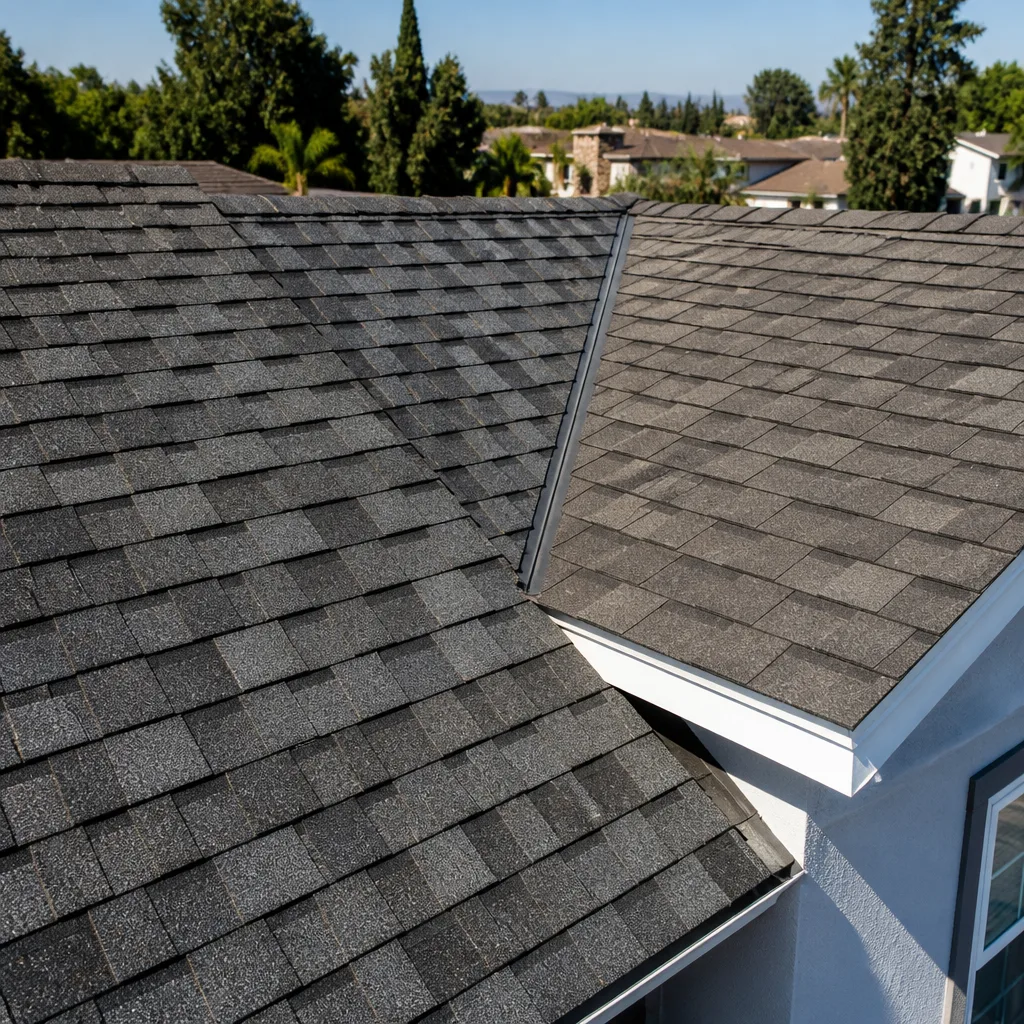
- Faded, chalky patches on south- and west-facing slopes. Those slopes take the most direct sun in Citrus Heights and age fastest. If one side of the roof looks noticeably lighter than the other, the sun has already shortened that side’s life.
- Curling or cupping shingle tabs. Heat cycles lift and warp shingle tabs, and once a tab lifts, wind gets underneath it and the seal is gone for good.
- Exposed or “bald” spots on the shingle surface. When you can see the black asphalt mat through what should be a fully granule-covered surface, that shingle is failing.
- Brittle shingles after a cool morning. Heat-aged shingles crack instead of flex. If stepping lightly onto a tab breaks it, the material is past its useful life.
The counterintuitive point: a Citrus Heights roof often looks fine in October but is already compromised by summer. That’s why October is the moment to inspect – while the damage is visible but before rain tests it. Roofs here take their worst UV punishment on the sun-facing slopes and the most damage on the storm-facing slopes, so a roof in Citrus Heights is often two different ages on the same structure. A proper inspection checks both, separately.
When it comes time to choose a replacement material, sun exposure is the first thing to weigh, not last. Asphalt shingles, tile, and metal all age under UV, but at very different rates and in very different ways – which we’ll get to in the material section below.
The October Window: Pre-Rainy-Season Inspection Protocol
The two-to-three week window in October between the end of the heat season and the first real storm is the highest-value maintenance opportunity of the year in Citrus Heights. Anything you fix now – a lifted flashing, a sagging valley, a clogged gutter – is a leak you don’t have to chase in December. And unlike mid-winter, October lets you work comfortably on the roof and complete repairs properly rather than patching them in the rain.
Here’s a practical inspection protocol focused on the failure points most likely exposed by summer thermal stress:
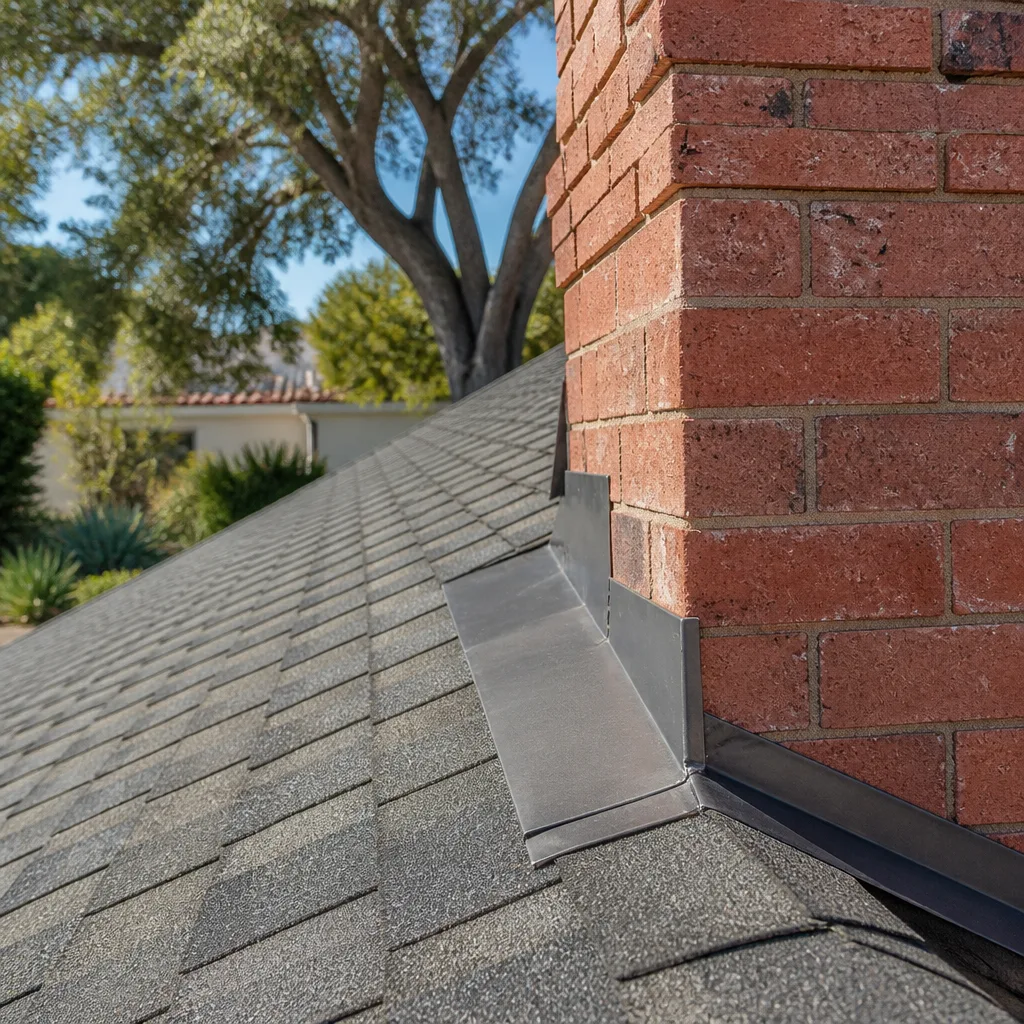
- Flashing at every penetration and transition. Chimneys, skylights, vents, and wall-to-roof transitions are where thermal expansion and contraction work hardest. Check the sealant, the flashing metal, and the fasteners. Any sealant that’s cracked, pulled, or separated from the surface is a leak waiting for rain.
- Valleys. The valleys – the V-shaped channels where two roof planes meet – collect both water and debris. In Citrus Heights, tree debris baked onto a valley during summer can hold moisture against the surface in winter and rot the flashing from underneath. Clear every valley before the storms arrive.
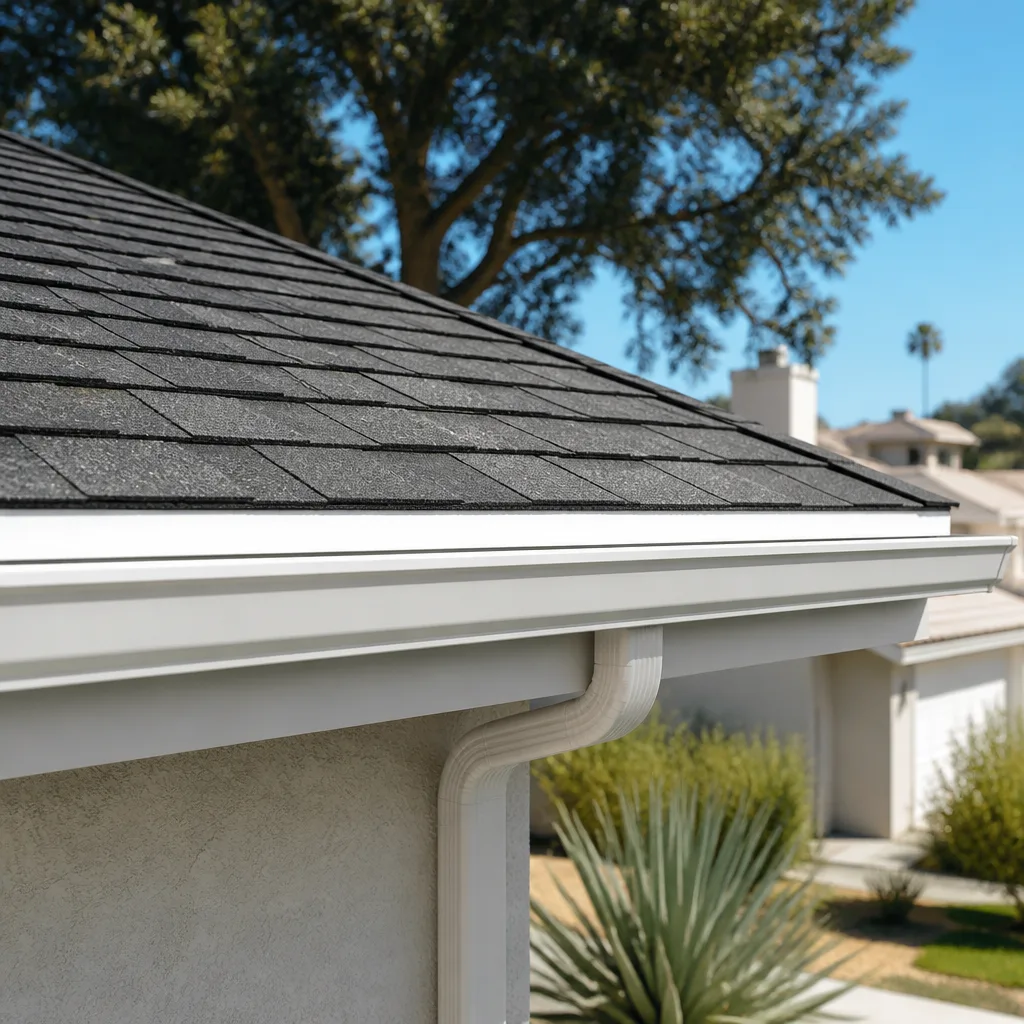
- Gutters and downspouts. This is the single most overlooked October task. Gutters clogged with shingle granules, leaves, and debris during the summer storm cannot carry winter rain away from the roof edge, and the result is water backing up under shingles and against fascia. Clean them, check the hangers, and confirm the downspouts carry water well away from the foundation.
- Fasteners. Walk the roof (or have it walked) and check for backed-out or lifted nails. Any nail that has worked loose during the summer heat cycle is a leak point the first storm will find.
- Seal strips on shingle tabs. If tabs have lifted and the adhesive seal is broken, they need to be resealed now, while the weather cooperates.
- Attic check. From inside the attic, look for daylight where there shouldn’t be any, staining on the decking or rafters, and damp insulation. Attic evidence often shows a slow leak long before it shows on the ceiling below.
Do these six things in October and you’ve addressed the roof failure points that most commonly lead to winter leaks in Citrus Heights. Skip them and you’re relying on luck through the storm season.
If you’d rather have a trained eye go over your roof than do it yourself, that’s a reasonable call – shingle roofing in particular has failure points that are easy to miss at ground level.
Tule Fog Season: Sustained Moisture, Not Rain
Winter in Citrus Heights brings something other valley climates don’t: tule fog. The fog settles into the valley during the cooler months and keeps the roof damp for sustained periods without a single drop of rain falling. This is a genuinely distinct condition from rain, and most roofing advice doesn’t account for it.
Why does fog matter more than a wet roof for a few hours? Because sustained moisture exposure allows water vapor to sit against the roof decking and under the underlayment for long stretches. The practical consequences:
- Wood decking stays damp in a way rain alone never causes. Rain falls and runs off; fog hangs around. Wood that stays at high humidity for weeks at a time is far more vulnerable to rot than wood that gets periodically soaked and dried.
- Low-slope transitions are exposed. Any roof section with a shallow pitch – porch roofs, additions, and transitions between roof planes – drains more slowly and holds standing moisture longer in foggy conditions. These sections deserve extra attention.
- Attic ventilation matters more than most homeowners realize. Adequate attic ventilation lets damp air escape rather than condensing on cold decking. If your attic stays humid through the fog season, the roof structure pays for it.
- Odor and interior dampness show up before leaks do. If your attic smells musty or you notice condensation on interior window glass, that’s a sign moisture is building up above you.
None of this means you should panic about fog. It means the roof should be inspected for ventilation and drainage before the fog season, not after. A roof that drains and breathes properly handles fog fine. A roof with clogged gutters, sagging underlayment, and blocked vents doesn’t – and the fog season is when that damage accumulates quietly.
If you’re replacing a roof in Citrus Heights, ventilation and underlayment are the parts you don’t see but should absolutely specify. Our technicians have up to 8 years of experience across the materials we install, and we walk each homeowner through what’s actually needed rather than quoting a one-size-fits-all assembly.
Spring Tasks: After Storm Season Ends
Spring in Citrus Heights is when storm season ends and the next heat cycle begins. April and May are the opportunities to see what the storms did, address it, and get the roof in shape for four months of direct sun. Waiting until summer to do spring work means doing it in the worst possible conditions – which usually means it gets skipped.
The three spring tasks that matter most:
- Identify granule loss. After the storm season, check the gutters and downspout exits again, and look for granule accumulation on the ground at the base of downspouts. Granule loss that shows up after a storm season is a sign the shingle couldn’t hold up through winter. If it’s widespread, the shingle has reached or passed its useful life and you’ll want an honest assessment before the next summer makes it worse.
- Check for lifted field nails from wind events. Winter storms in Citrus Heights produce wind that can lift field nails, break shingle seal strips, and loosen ridge caps. A spring check catches any fastener or tab that worked loose during the storms. Lifted nails and broken seals that get ignored are exactly the spots where the next storm – or the next big rain – starts a leak.
- Clear debris before summer bakes it in. Tree debris that lands on the roof during winter and stays there through summer will adhere to shingles, hold moisture against the surface, and accelerate UV breakdown on whatever is underneath. Clearing debris in spring is also the easiest way to prevent pests and vegetation growth from taking hold on the roof.
Spring is also the right time to schedule the next inspection if you haven’t had one on the calendar. A roof that gets inspected in spring and again in October lives longer in Citrus Heights than a roof inspected once a year – and far longer than a roof only looked at when it leaks.
Material-Specific Seasonal Care: Shingle vs. Tile vs. Metal
The seasonal calendar we’ve walked through applies to every roof in Citrus Heights, but the specific tasks change significantly depending on what your roof is made of. This is where a lot of generic maintenance advice breaks down – the same weather cycle produces different stresses on shingle, tile, and metal. Here’s how each material lives through a Citrus Heights year.
Asphalt Shingle Systems
Asphalt shingles are the most common residential roof material in Citrus Heights, and they carry the most seasonal maintenance responsibility. UV exposure is the defining stress here: shingles age from the top surface down as the sun breaks down the asphalt binder and releases the granules. Seasonal care for shingles focuses on:
- Checking granule loss after every major windstorm and again in spring.
- Resealing lifted tabs in October before storm season.
- Watching for curling, cupping, and bald spots on south- and west-facing slopes.
- Clearing tree debris in spring so it doesn’t fuse to the shingle surface through summer.
When it’s time to choose shingle brands or materials, the difference between manufacturers matters long-term. Whether you’re considering IKO or Atlas or another line, the installation quality and the manufacturer’s warranty program are what determine value, not just the shingle itself. Manufacturers whose programs include transferable limited lifetime warranties add real long-term value beyond the initial install.
Concrete Tile Roofs
Tile roofs in Citrus Heights hold up better than shingles against UV and heat, but they have their own seasonal pattern. The tile surface itself is essentially the most durable thing on the roof – it’s the underlayment beneath it that takes the wear. Seasonal care for tile focuses on:
- October: Inspect underlayment condition and check for cracked or slipped tiles after summer thermal expansion. A tile roof can have a perfectly fine surface and a failed underlayment underneath, so the inspection has to go beyond the visible tile.
- Winter: Check tile alignment and flashings after storm season. Wind and water can shift tiles, and a shifted tile lets water under the field.
- Spring: Clear debris from between tiles and check the valleys. Tile valleys collect debris like shingle valleys do, but with the added complication that shifting tiles during cleanup can damage the field.
Tile is often a great fit for homes where heat resistance and longevity matter most. Boral tile products are among those we install, and the right tile assembly depends on the home’s structure and the pitch of the roof.
Metal Panel Roofs
Metal roofs in Citrus Heights are the most low-maintenance option seasonally, but “low-maintenance” isn’t the same as “no-maintenance.” Metal expands and contracts more than any other roofing material through the heat cycle, which puts all the mechanical fasteners and seams under repeated stress. Seasonal care for metal focuses on:
- October: Check every fastener and seam. Loose fasteners are the number one metal roof leak source, and thermal movement is what loosens them. Any fastener that’s backed out needs to be addressed before storms.
- Winter: Inspect after major wind events for panel movement.
- Spring: Clean the panels and check the coating. A metal roof’s coating is its UV protection – scratches or wear that expose bare metal should be addressed before summer.
Seven brands, three materials, one contractor: that’s the practical advantage of working with a roofing company that installs all three. Whether you’re comparing shingle vs. tile vs. metal, or looking at specific lines from IKO, Atlas, or Tamko, we’ll walk you through how each one handles the Citrus Heights weather cycle so the choice makes sense for your home.
The Seasonal Roof Care Calendar at a Glance
Here’s the whole year, condensed into a table you can actually use.
- October (pre-storm window): The highest-value maintenance of the year. Inspect flashing, valleys, and gutters. Reseal lifted shingle tabs. Check fasteners. Clear all debris. Schedule a professional inspection if you’re not confident climbing up.
- November-March (storm window): Watch for leaks after each major storm. Check attic for new staining or daylight. Address any active leak immediately. Keep gutters clear of winter debris.
- Fog season (cooler months): Confirm attic ventilation is adequate. Check low-slope transitions. Recheck for interior moisture signs, musty attic odor, or condensation.
- April-May (spring transition): Assess granule loss after storm season. Check for lifted field nails and broken seal strips. Clear all winter debris before summer bakes it in. Schedule any repairs now.
- June-September (heat season): Minimize work on the roof during peak heat. Watch for signs of UV degradation. Plan the October inspection and any replacement decision before heat damage compounds further.
If you’re planning a new roof or preparing for one, the calendar also tells you when materials can actually be installed reasonably. If you’re at the point of considering a new roof installation on new construction or a home you’re building around, the right window to start planning is roughly now – not mid-summer.
Common Mistakes to Avoid
- Treating spring as the only inspection season. Spring matters, but October is where most preventable leaks are stopped. A roof inspected once a year in the spring has already gone through one storm season without the pre-storm protection it needed.
- Cleaning gutters only in spring. The heaviest debris load comes from the storm season, but the most dangerous clog is the one that’s already in place when storms begin. Clean gutters in October and again in spring.
- Ignoring granules in the downspout. Granules at the bottom of a downspout look like sand and get dismissed as dirt. They’re actually shingle wear, and the amount tells you how fast the shingle is aging.
- Assuming a tile roof doesn’t need inspection. Tile surfaces can look perfect while the underlayment underneath is at the end of its life. A tile inspection has to go below the tile surface to mean anything.
- Skipping metal roof fasteners. Metal roofs are sold as low-maintenance, but thermal expansion here loosens fasteners over time. A metal roof that’s never had its fasteners checked is a metal roof that’s never been properly maintained.
- Letting tree debris sit through summer. Debris that lands in spring and stays until fall fuses to the roof surface through the summer heat, holding moisture against shingles in a way that accelerates UV damage on the exact spot where it sits.
- Putting off replacement until leaks start. Once a leak is visible inside, the damage is already under the roof. In this climate, shingles age from heat for years before the first rain finds a weakness. If the shingle surface shows widespread granule loss and curling, waiting for the leak costs more than addressing the roof.
When to Call a Professional
Some seasonal roof work is safe and reasonable to do yourself: clearing debris, checking gutters from the ground, looking at shingles through binoculars, checking the attic from inside. Everything else deserves a trained eye. Call a professional if you see widespread granule loss, curling or missing shingles, cracking or separated sealant at flashings, daylight in the attic, water staining on ceiling or rafters, or if any part of the roof requires you to walk or climb on it. Roof work is genuinely dangerous – a fall off a single-story roof can cause serious injury – so stay off the roof if you’re not confident. Also call if your roof is approaching the end of its expected service life, because the decision to replace is best made before a leak forces the timing.
Citrus Heights Roofing Co offers free estimates in Citrus Heights – call (279) 321-0356 to schedule yours. We answer 24/7. Fast dispatch from 7am to 7pm, Sunday through Friday.
See the difference
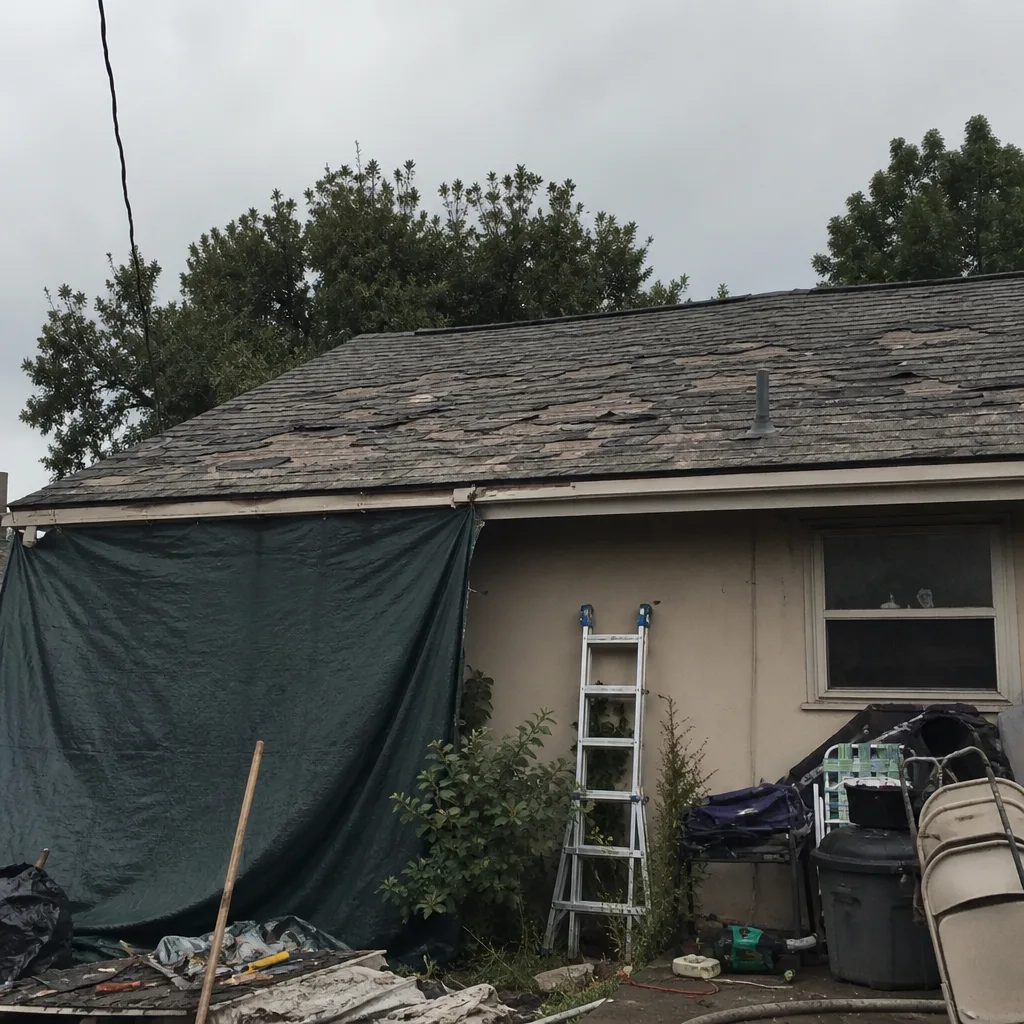 Before
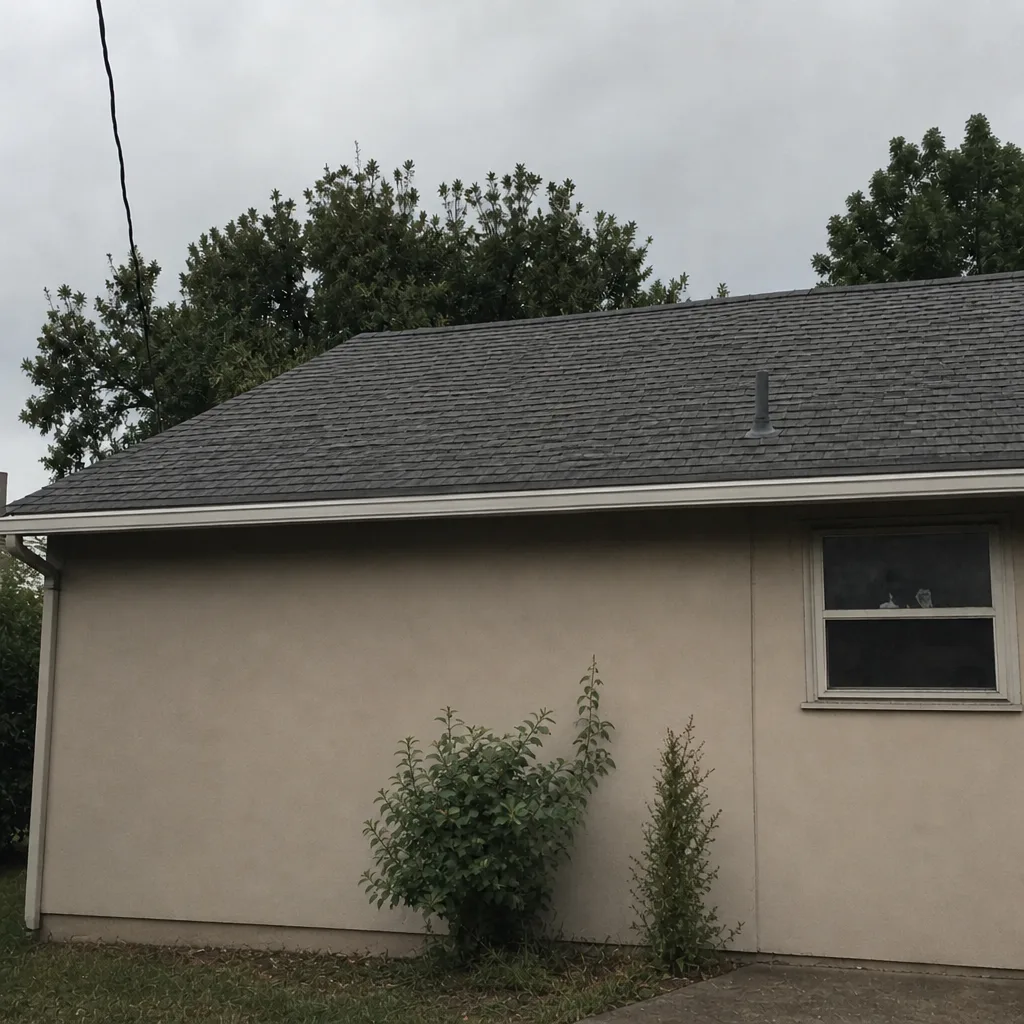 After
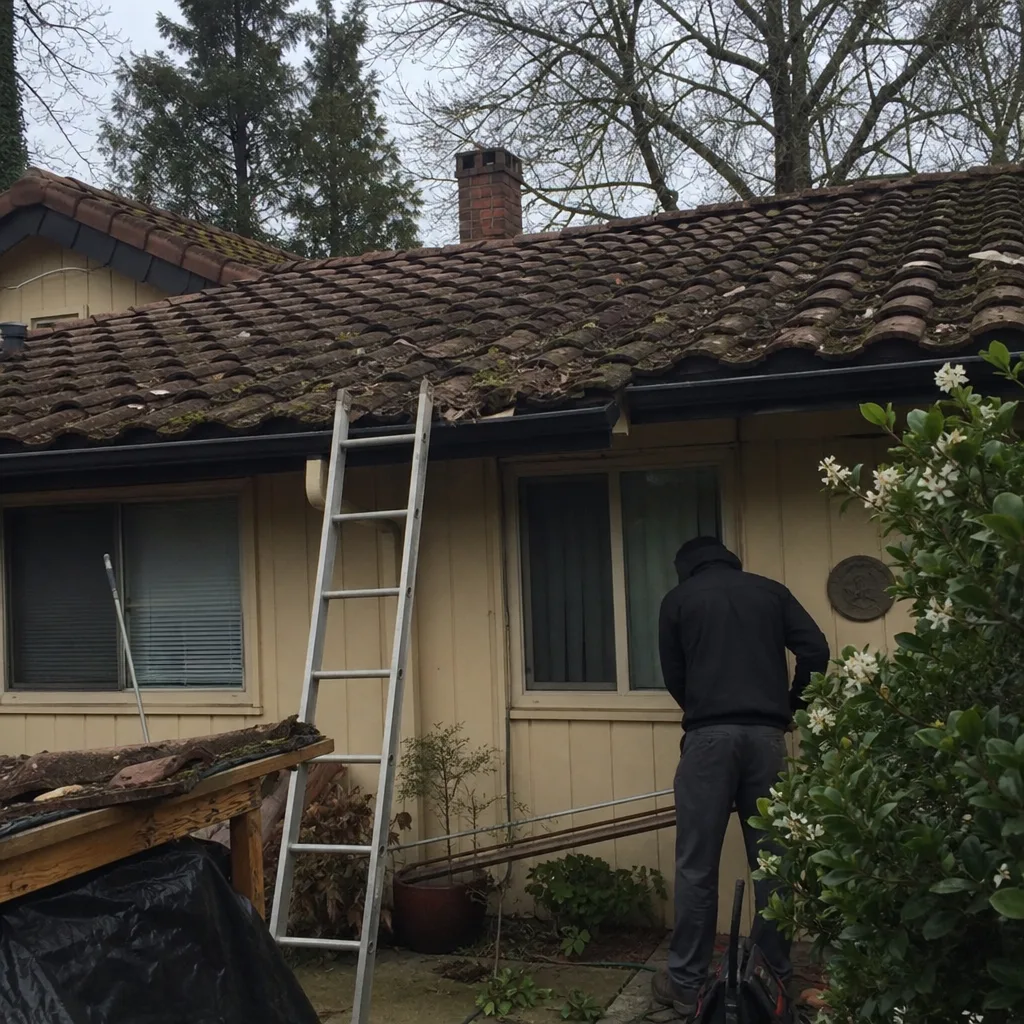 Before
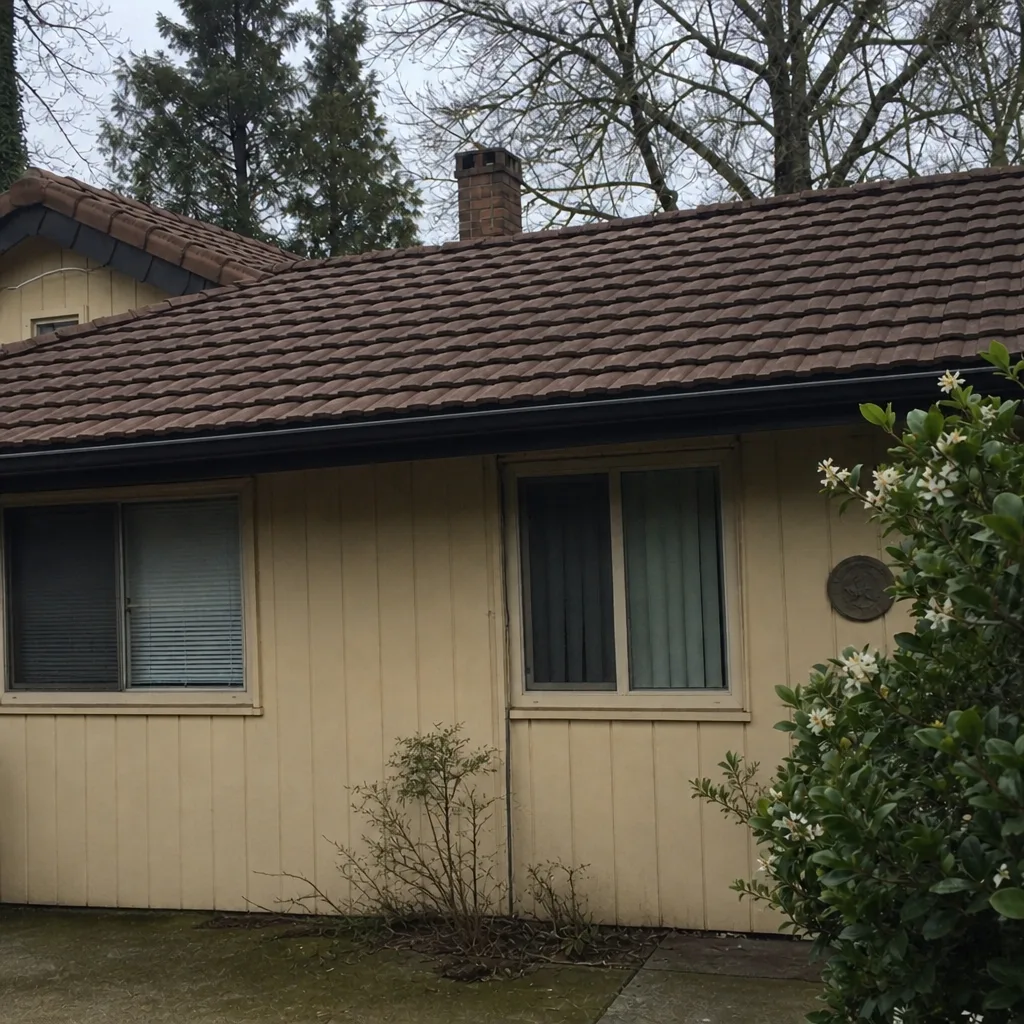 After
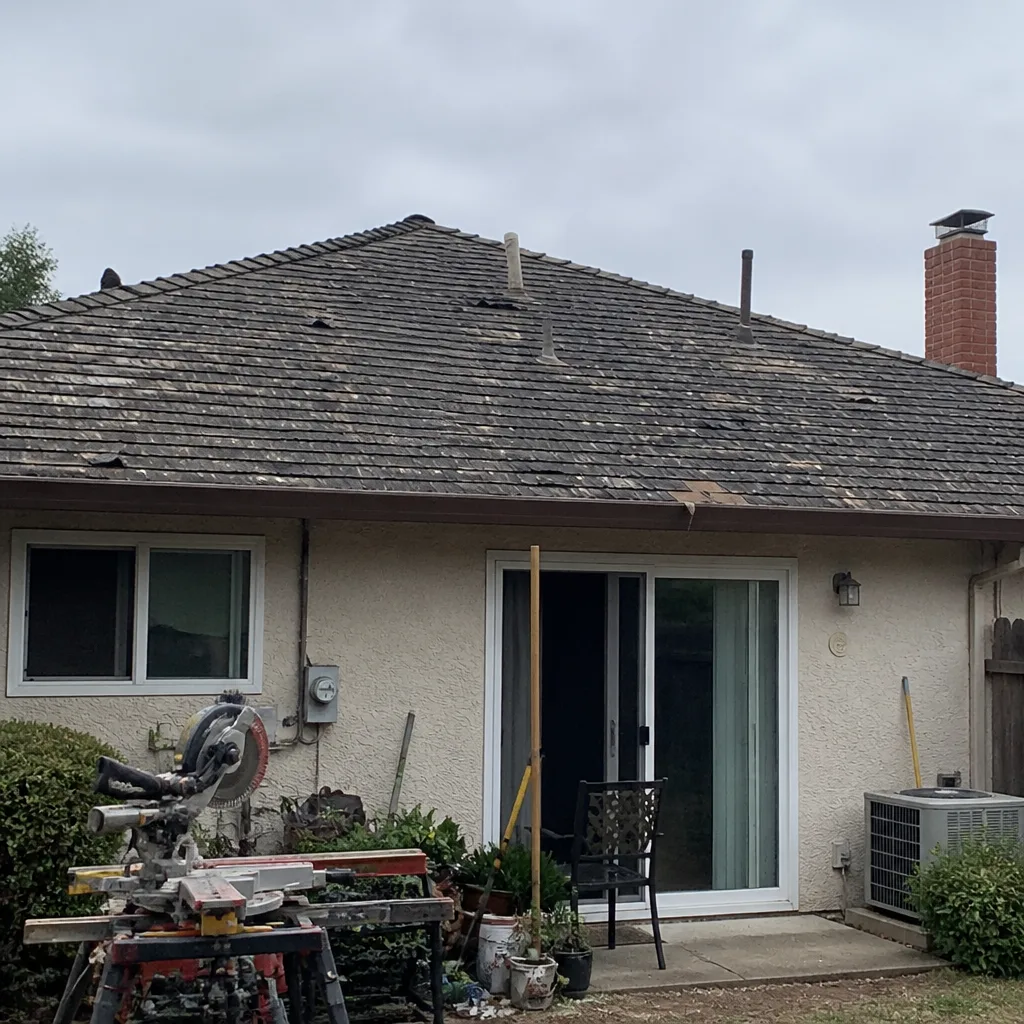 Before
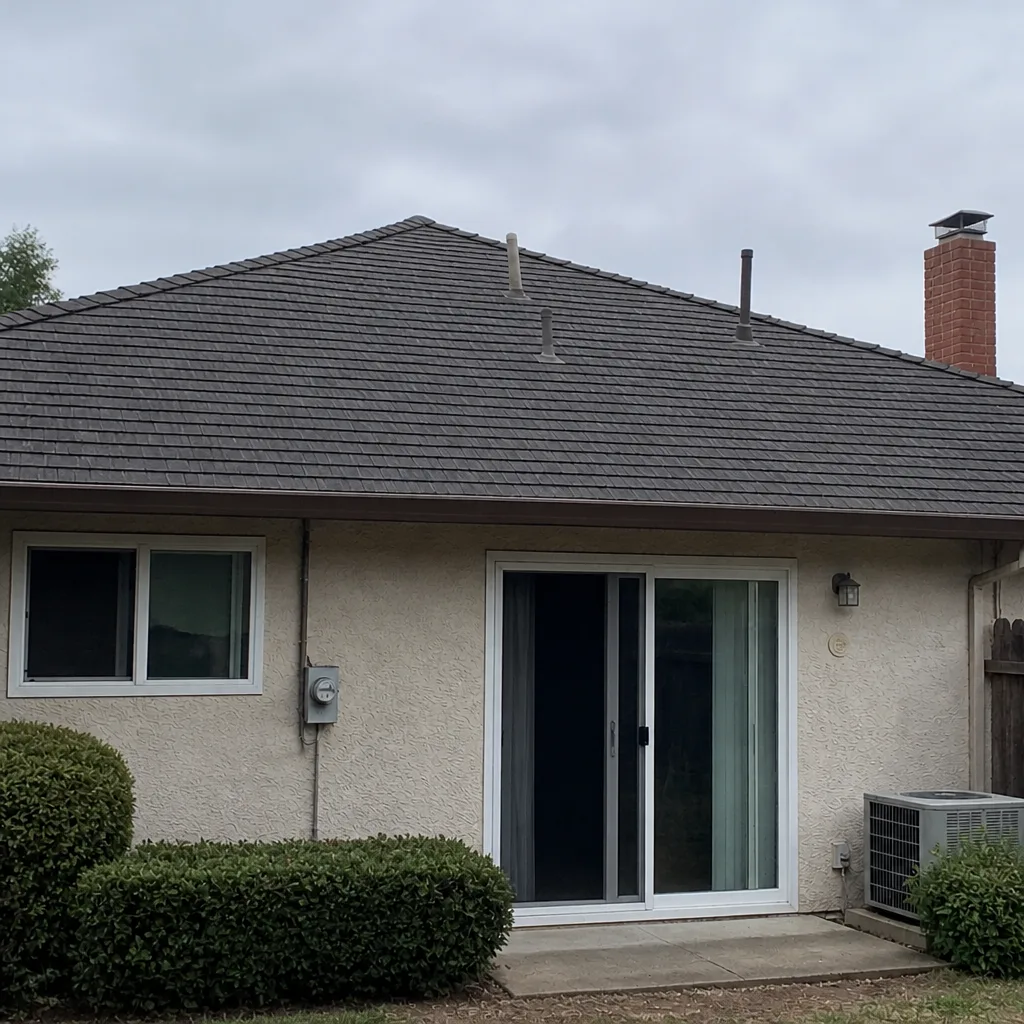 After
Frequently Asked Questions
October is the most important month for roof maintenance in Citrus Heights because it’s the dry gap between the summer heat season and the first storm. Any flashing, valley, or gutter problem you fix in October is a winter leak you avoid entirely. By November the damage is done and the weather no longer cooperates for easy repairs. Call (279) 321-0356 to schedule an October inspection while the window is still open – estimates are free.
Twice a year is the practical minimum in Citrus Heights: once in October before the storm season and once in spring after it. The October inspection catches summer heat damage before rain finds it; the spring inspection catches winter storm damage before summer heat makes it worse. Roofs over 15 years old, or roofs with significant tree cover, benefit from an inspection in both windows plus a visual check after any major winter storm. Call (279) 321-0356 for a free estimate on an inspection.
Yes. The long, dry summer here delivers nearly four months of sustained UV exposure, and UV is the single biggest factor in asphalt shingle aging. Shingles here lose granules and become brittle faster than in cooler or wetter climates, and their service life reflects that. This is why spring granule checks and October resealing matter so much – they’re not optional maintenance here. If your shingles show widespread granule loss or curling, it’s worth having a professional look before the next summer. Call (279) 321-0356 for a free estimate.
Tule fog keeps the roof damp for extended periods without actual rain, which is harder on wood decking and low-slope transitions than rain that falls and runs off. Sustained moisture sits against the underlayment and allows condensation to build in the attic. Adequate attic ventilation is the primary defense against fog-related moisture damage. If your attic stays humid through winter, an inspection is a good idea – call (279) 321-0356 for a free estimate.
All three materials need seasonal care, though the tasks differ. Tile needs underlayment inspection and checks for cracked or slipped tiles; metal needs fastener and seam checks because thermal expansion loosens them; shingle needs granule, seal, and tab checks. No roof material is truly zero-maintenance in the Citrus Heights climate. We install all three – whether you’re looking at IKO shingles or Boral tile, we’ll walk you through what the maintenance actually looks like. Call (279) 321-0356 for a free estimate.
A Citrus Heights roof can look fine in October and leak in January because UV damage is often invisible from the surface until rain tests it. Heat-cracked sealant, hairline cracks in flashing, and brittle shingle tabs all show up as leaks only when water is actually flowing. This is exactly why an October inspection by a professional matters – it catches the weaknesses that the surface hides. Call (279) 321-0356 for a free estimate before the next storm season.
The Bottom Line
Seasonal roof care in Citrus Heights works differently than a generic checklist because the climate here isn’t four equal seasons. Summer UV is the primary aging mechanism, October is the highest-value maintenance window, tule fog creates sustained moisture distinct from rain, and spring is the moment to assess what the storms did before summer compounds it. Get those four things right – October inspection, spring debris and granule check, ventilation for fog season, and material-specific attention to whether you have shingle, tile, or metal – and your roof will last meaningfully longer than one maintained on autopilot. Seven brands. Three materials. One contractor. If you’re ready to look at the roof with trained eyes, call (279) 321-0356.
Contact Us
Ready to put a real maintenance schedule on your roof? Citrus Heights Roofing Co connects homeowners with independent local professionals who install and replace asphalt shingle, tile, and metal roofing, and we work with seven manufacturer programs to give you genuine material choice. Estimates are free, quotes are written line-item, and the price is set per job by the written estimate. Call (279) 321-0356 to schedule your free estimate. We answer 24/7. Fast dispatch from 7am to 7pm, Sunday through Friday. You can also start with our Citrus Heights Roofing Co home page for the full service picture.
Written by the team at Citrus Heights Roofing Co.